Showing posts with label Jackie Marchant. Show all posts

Wednesday, 3 October 2018

I am Thunder by Muhammad Khan. Review by Jackie Marchant


Written by a British-Pakistani maths teacher from London, who has taken on board one of the most important ‘rules’ of writing – write what you know.  This book combines the angst of a teenaged girl who is desperate to fit in, while her parents want her to be a ‘good Pakistani girl’.  She loves English and wants to be a writer, while her parents are desperate for her to become a doctor and lead the family out of the poverty they find themselves in the UK.  Then there is the issue of being a British born Muslim . . .

Muzna’s parents not only refuse to practice Islam, but they forbid Muzna to do so as well.  So, when she starts wearing a hijab, there are rows.  But why has she decided to wear a hijab?  Is it because she wants to explore her religion, or is it because she’s fallen in love with Arif, who won’t respect her unless she does?

The more we learn about Arif, the more we realise that his beliefs are not necessarily motivated by all the good that comes from Islam – there is a lot of hatred there too.  As for his elder brother Jameel, who takes them both to ‘meetings’, his radical ideas start to cause Muzna more concern than her love for Arif can hide.  What is the truth?

As Muzna takes the slippery path towards fundamentalism, she has some tough decisions to make. 

As I said, this book has been written by someone who knows – not only about the dark side of racism, but the good side of those who oppose it, leaving Muzna to find solace in some unlikely places. But it’s also written by an author who cares – and that really comes across.

I am Thunder tackles the thorny issues of racism, extremism and Islamophobia head on.  It’s also a cracking read and fast-paced thriller – I expect we’ll be seeing more from this author.  Brave and heartfelt.


Return to REVIEWS HOMEPAGE

Monday, 4 September 2017

A STORM OF STRAWBERRIES – by Jo Cotterill

Reviewed by JackieMarchant


There’s so much to like about the main character of this book, twelve year old Darby.  She lives for the moment, she dishes out hugs as frequently as she recovers from upsets, she is kind, loving and forgiving.  She loves dancing with her headphones on full-blast and she loves chocolate.  She has a habit of wandering off to try and solve things, even though she knows this exasperates her parents.  But the thing I love best about Darby is that she accepts everyone for who, and what, they are.

Still, it’s very hard for Darby when her big sister Kaydee has a girlfriend over for the weekend.  Kaydee and Darby are close and this newcomer doesn’t like it when Darby barges into Kaydee’s bedroom whenever she feels like it.  And, when it becomes obvious that Kaydee wants to spend time alone with her best friend, Darby finds that hard to bear.
 
Unfortunately, her parents’ strawberry farm is in crisis, due to a weekend of storms that threaten to cause damage enough to seriously impact their livelihood.  This means that Mum and Dad are not so ready to sympathise and Darby’s big brother Olly isn’t much help either –he’s far more interested in the newcomer.  All of this is very muddling and Darby has to do a lot of earphone-dancing to keep ahead of things.

Things come to a head when the high winds threaten to spoil Mum’s annual chocolate egg hunt.  Especially as everyone seems cross with Darby and she can’t quite grasp why – giving away Kaydee’s secret was a complete accident and not really her fault.  As for why Olly is cross, she has no idea.

If only she could tell her family to get a grip, but sometimes it’s difficult to find the right words to express what you want to say.  Especially when you have Down’s syndrome.

This is a book with a real heart – as well as strawberries and chocolate.  What’s not to like?


Return to REVIEWS HOMEPAGE

Tuesday, 18 July 2017

EVIE’S GHOST – by Helen Peters

Reviewed by JackieMarchant


Evie’s Ghost is the sort of book I loved to be engrossed in when I was a child – a real curl-up-and-read.  That doesn’t mean I didn’t enjoy it equally as an adult – I might not be as physically able to curl up without a bit of creaking now, but I loved this from the moment Evie was sent to an aged (in child’s terms) godmother who lives in a flat in a big old house.

OK, child being sent to live with aged person in a big old house might not sound the most original start, but it’s one that always gets me going.  I loved what happens after Evie arrives and it is made clear she will left to her own devices, because aged godmother is far too busy digging up skeletal remains. 

This is when, at the invitation of a distraught ghost, Evie finds herself 200 years in the past, in the same room, in the same house.  Unfortunately she’s no longer a guest, but a housemaid.  Plunged headlong into the drudgery and sheer hard work of household staff, Evie soon appreciates the things we have today – like hot water from a tap and a switch to bring instant light.  A vacuum cleaner to suck up dust instead of having to brush carpets every day.  A fireplace that doesn’t have to be scrubbed until it shines every morning.  Sorry, I mean eight fire places – this is 200 years before central heating has been invented.

While Evie’s hands blister and cut thanks to lack of rubber gloves (not invented yet) and the caustic cleaning products that sting and scald sensitive skin, she is also supposed to be saving the daughter of the owner of the big house from a horrible fate.  But Evie soon learns that in those days maids did not talk to the daughters of the owner of the house.  Evie can’t even talk to the housekeeper without a clip round the ear – which was a perfectly legal thing to do in those days.

But there are moments when Evie manages to see the delights of living in that era – the scent of an unspoiled bluebell wood, the peace due to lack of motor cars, the splendid gardens of the house she knows will be long gone when she returns.  If she returns.

Evie can only hope that she will return once she has fulfilled the task of solving the desperate plight of the ghost.  But, as a lowly maid, this is not easy and Evie learns a hard lesson in class division.  Tension builds as Evie tries and fails until she despairs of ever returning.  At the same time, she learns a lot about the injustices of that world.

I could say that this is a book about being grateful for what you have, but that might make it sound preachy, which it certainly isn’t.  It’s a good story and a page-turning read.


Return to REVIEWS HOMEPAGE

Wednesday, 24 May 2017

THE LAURAS – by Sara Taylor

Reviewed by Jackie Marchant


Billed as a road-trip novel, I’d say this is so much more.  It’s a thirteen year old being woken by yet another row between parents, then being yanked out of bed and into Mum’s car.  So begins a road-trip that not only takes in several US states but introduces Alex to a past relived by a mother who has not said anything about until now.

It’s a very interesting past, involving an unconventional home life with parents who lapsed in and out of coping, foster homes both good and bad – and the Lauras, girls who’d influenced Alex’s mother’s life in some way.  In between the gradual opening up, there are those needing help, those needing revenge – and the sudden appearance of a gun.  All the while the two of them drift and Alex has to settle into new schools before being uprooted once again to go on the road. 

Then there is Alex.  The desire to go back home, against the need to be on the road.  This is where my review becomes tricky – because I can’t refer to Alex and ‘she’ or ‘he’ and I don’t want to write he/she, because Alex doesn’t know either.

Yet Alex’s indeterminate gender is not the focus of the story, although it does have consequences, particularly at school.  What stands out is Alex’s mother’s support, given unconditionally since the day Alex came home from school in tears because the children had been told to line up in a girls’ or a boys’ line and Alex was left not knowing which one to choose.
Throughout the book you never know whether Alex was born male or female.  But one thing for certain is that Alex is Alex, and it is this, not Alex's gender, that counts.

But please don’t think this is a book about gender – it is a about a mother and child road-trip, were discoveries are made, both self and each other.  It’s beautifully written and both Alex and the drifting mother come across as fully rounded characters, flaws, good points and all.

Supposedly for the adult market, I think this would sit perfectly alongside YA.  And although it’s not the main theme, it would be a welcome addition to the LGBT shelves.


Return to REVIEWS HOMEPAGE

Friday, 31 March 2017

SEE YOU IN THE COSMOS by Jack Cheng

Reviewed by Jackie Marchant


I don’t like describing books as ‘bitter sweet’, it reminds me of the cloying fragrance of air conditioners. In any case, although it’s a phrase I’ve seen used to describe this book, I won’t go there because it wouldn’t do it justice.  Instead, I’d describe it as funny and sad, frustrating and satisfying. 

It’s about eleven year old Alex, obsessed with the cosmos and determined to launch his golden iPod into space, by winning a big launch competition for amateur rocket builders.  So off he goes, together with his dog Carl Sagan (named after his hero, the famous astronomer, who launched a golden record into space on the Voyager spacecraft) to the middle of the desert to meet other likeminded people. 

Yet under all his hopes and his joy at what he is doing, there is an undercurrent of something else going on – the mother he has to leave meals for in the microwave, the absent brother and non-existent father.  Yet, he records all of this on his golden iPod, so it can be heard by the alien life-forms who find it after he’s sent it into space. 

But as he meets other members of the amateur rocket community who assumed they were talking online to an adult, we can see, even though Alex appears not to, that there is cause for concern.  We also see that he is so likeable that they are willing to help him.

As Alex sets off to Las Vegas to discover the truth about his father, we are touched by both his innocence and the support he has from this odd bunch of people he’s never met who care about him enough to  help.  At the same time there is the realisation that those who should care most about him, don’t.  Until it becomes a real possibility that Alex will have to go into care.


It’s a book about innocence, love, friendship, support and most of all, hope.  It’s a feel-good read, light-hearted and refreshing and full of characters you’d like to meet in real life.  It’s a book that I suspect will be enjoyed by adults as much as the mid-grade readers it is aimed at.


Return to REVIEWS HOMEPAGE

Saturday, 4 February 2017

SWAN BOY – by Nikki Sheehan

Reviewed by JackieMarchant

This is a story about bullying, about identity, about caring for your little brother, about loss and grief, about a mad but caring teacher – and about some swans.

Still devastated by the sudden loss of his father, Johnny has had to leave his childhood home and move to a tiny high-rise flat with his mother and brother Mojo.  Even worse, he has to start a new school.  All he wants to do is fit in, but he is targeted by a gang of bullies, led by a small, but particularly nasty Liam.  When Liam is attacked by a swan while in the process of tormenting Johnny, a new nick-name is bandied about the school by all those who’d rather it was Johnny being bullied than them – Swan Boy.

But Johnny felt something – a connection with the swan. Yet exploring this further would mean not fitting in, so he tries to deny it.  At the same time, he shuns any attempt at friendship from another boy being bullied.  He even starts being nasty to the little brother he’s supposed to be taking care of – because that is what is expected of teenagers.

Then, horror of horrors, Johnny is invited to partake in a dance for the school as a way of getting out of litter duty. Bad enough, without the fact that the whole gang of bullies are involved as well.  Then, he is given the leading role in the production of none other than Swan Lake.

This is where the mad but big-hearted teacher comes in, trying to introduce the ‘hopeless cases’ to something as completely not fitting in as dance.  At the same time, the connection between Johnny and the swan is growing until he feels just like the prince in swan lake – turning into a swan.

As Johnny denies who he is in order to fit, he finds himself hurting others and racked with guilt.  Then his little brother Mojo, having his own problems at junior school, comes out with a devastating secret.

Yet, throughout this journey of self-discovery and confusion, it is obvious that Johnny and his family are close.  He cares deeply for Mojo and his struggling mother obviously cares deeply for them both – she too is coping with grief.  For me this made a refreshing change from the uncaring or absent parent and somehow made Johnny’s plight more profound. 

It’s simply written, easy to read with bursts of unexpected humour.  It’s not a deep and gloomy book, but an uplifting one and I enjoyed it very much.


Return to REVIEWS HOMEPAGE

Thursday, 1 December 2016

THE MARVELS by Brian Selznick, reviewed by Jackie Marchant

Reviewed by Jackie Marchant


With my review slot imminent, I walked my dog to the library, tied him to his usual spot outside and went in to find a book to review.  Something small, I thought, a mid-grade paperback that would fit in my little back-pack for the journey home.  I came out with the biggest, heaviest book on the children’s shelves.  A whopping hardback with gilt edges.


But how could I resist?  I’ve read both of Brian Selznick’s previous books and absolutely loved them. Yes, they are big books, but they are what reading is all about.  They are books you have to really hold to read, they are heavy and feel like, well – Books (but with a capital ‘B’).  And please don’t think the paperback would do – these books are works of art and belong in hardback.  If you’ve not come across Brian Selznick’s wonderful books before, then get ye to a library (with something suitable to carry it home in) – you have no idea what you are missing.


Like the other two (The Invention of Hugo Cabret and Wonderstruck in case you really don’t know, but I can’t believe that) this one is told in a mixture of illustration and text.  As ever, the illustrations are beautiful, drawing you into the wonders of the story.  Not a single word for nearly 400 pages, but an absolute pleasure to read.  And yes, illustrations do have to be read, just like words.

This is a story within a story.  It’s the story of shipwreck, of lost love, a long line of actors and a theatre.  It’s also a contemporary story of the wonders that live under your own roof, if only you could see them.  Based on a real house (18 Folgate Street), it’s about a man who buys an old house in Spitalfields and turns it into the real, living yet imaginary home of the family in the story.  It’s about the runaway nephew who seeks sanctuary here and discovers the story for himself. 


It’s a lovely book – with an added bonus.  18 Folgate Street is open to the public so you can see the inspiration behind the story for yourself.  Enjoy!


Return to REVIEWS HOMEPAGE

Monday, 26 September 2016

SHE IS NOT INVISIBLE by Marcus Sedgwick

Review by Jackie Marchant 


This was shortlisted for the inaugural YA Book Award and, to be honest, I preferred it to the winner, but that’s another story.  There is so much to this book – a great plot, a mystery, a puzzle or two, a dash of thriller and a tough challenge, all bound up with excellent writing.  

It begins with Laureth trying to convince herself that she’s not abducting her seven year old brother, even though she’s at the airport with him and her mother’s credit card.  It takes a while to realise why young Ben is an essential companion as she tries to find out why her father has disappeared in New York when he’s supposed to be in Switzerland.  It’s only towards the end of the first chapter that you realise Laureth is blind.  Even then, it takes her a long time before she quietly confesses to someone.  She doesn’t want to bring attention to herself as she fears they will send her back for travelling with a seven year old. 

What chance does a blind sixteen year old girl have in finding a missing father, when her only aid is a young boy who thinks this is a planned trip to visit him?  But Laureth is resourceful and, despite what she thinks, responsible.  She manages to meet the person who contacted her father to tell him that he’d found his notebook.  As Lauren answers all her father’s fan mail, she now knows that her father is not where he’s supposed to be and, even worse, he’s lost his precious notebook.  Her father is a writer and, as one myself, I know that loss of a notebook is an absolute disaster.  But when Laureth meets up with the person who found it, they are not what they seemed and the mystery only deepens.

Then there is the content of the notebook.  To the reader, lots of quirky notes about coincidence, strange cults and suicides, but to Laureth the frightening truth that her father might be in real danger.  So she goes off to New York with her little brother to find him.  Then the trouble really starts.  But I will say no more as I don’t want to give anything away.

This is not your usual page-turner.  As well as gripping, it is original and quirky, beautifully written, with realistic characters and plausibility.  It’s described as a thriller, but it is so much more than that.


Return to REVIEWS HOMEPAGE

Thursday, 28 July 2016

Dara Palmer’s Major Drama by Emma Shevah

Reviewed by Jackie Marchant


This is a book about how nuns and noodles can change your life.  And don’t worry, that’s not a spoiler, it’s there in the first line.  As you can imagine from that, this is a light-hearted read, full of laughs and a lot of Major Dramas.  That’s not a spoiler either – it’s in the title.

But there is a serious side to this book.  Dara, convinced that she’s destined to become a major Hollywood star, knows she’ll land the main role in the school play without the need to audition.  So, when she’s not even given a walk-on part, she can only think of one reason why – the main part is Maria Von Trapp, blonde and Austrian, not dark and Cambodian like Dara.

At first I was perturbed that this could be the reason for not casting her in a white role – surely schools and teachers aren’t allowed to do that?  But then the truth creeps in – it could be that Dara might be better at over-acting than acting.  Her thinking she needs no drama lessons and refusal to even think about them could be part of the problem.  The fact she hero-worships two white, blonde Hollywood stars who couldn’t act their way out of a paper bag doesn’t help either.  Besides, as her friend Lacey points out, there are children from all backgrounds in the cast.  Huge sigh of relief, the school is not guilty of discrimination here.

The rest of the world is, however, different.  Dara, desperate for Hollywood, does not know a single well known Cambodian actor.  There are no posters of gorgeous Cambodian Hollywood stars and she can’t see how she can be cast in these roles looking the way she does.  Her ever helpful brother can count on the fingers on one hand how many there are in real life.  Makes you think. 

The other issue is that of her background.  Dara has been adopted into a white, blonde family.  Her brother is the natural child, her sister is adopted, but, being blonde and from Russia, there are no raised eyebrows when she’s introduced as a member of the Palmer family.  But her family are utterly supportive in her need to find out who she is.  Despite the major dramas in her life, Dara knows how lucky she is.


This is a book about identity and dreams.  It’s about accepting who you are and accepting others for who they are.  Most of all it’s a fun, heart-warming read.


Return to REVIEWS HOMEPAGE

Sunday, 29 May 2016

The Accident Season by Moira Fowley-Doyle

Reviewed by Jackie Marchant


Cara has always been aware of the accident season.  It happens every October and causes falls, injuries and even death – but only to Cara and her family.  Her best friend Bea, despite being close to the family, always survives unscathed, but her ex-stepbrother, who is not  a blood-relative, is prone.  It is the month when their mother does everything she can to stop it – from extra rugs on the floor, padding every corner in the house, making Cara and her sister Alice wear coats and gloves no matter what the weather.

But Cara is seventeen and beginning to ask questions.   What causes this month of danger, which ends at Halloween?  Is there something more sinister going on?  At the same time, she starts seeing shimmery unworldly figures that mirror her close group – herself, her sister Alice, her best friend Bea and her ex-stepbrother Sam.  These alternative people seem to echo the concepts of the faery world Bea is so interested in, while having problems of their own regarding an evil step-father, who bears a striking resemblance to Sam’s long-gone father, who left after three years of marriage to Cara’s mother.   Then there is Alice’s too-good-looking-to-be-true boyfriend and the October bruises that Cara realises weren’t accidents.  Added to the mix is the mysterious Elsie, who has been at school with them all this time, yet no one seems to notice her, especially when she disappears.

These strands are all skilfully woven together in a mix of fantasy and reality, as the mystery deepens and the dangers become more real.  At the same time, Cara has to deal with her feelings for Sam that don’t seem quite right, as well as Bea’s pulling away from her towards Alice.  The tension increases as the story unfolds and hidden secrets come to the surface.

It’s a thrilling, fast-paced read, with well-drawn characters and many heart-in-your-mouth moments.  It’s dark and mysterious, but ultimately a good, satisfying book.  Perfect for fans of Frances Hardinge, I can highly recommend it.


Return to REVIEWS HOMEPAGE

Saturday, 26 March 2016

The Art of being Normal by Lisa Williamson

Reviewed by Jackie Marchant


This is a well-written, entertaining read, deserving of its shortlisting/award success.  

It’s about David, who has always known he’s a girl, but has told no one but his two best friends, who are now going out with each other.  He has understanding parents, yet he still can’t bring himself to tell them, let alone the rest of the world.  And, following a cringingly brilliant bullying scene, it’s easy to see why.  Now enter Leo, the new ‘hard’ kid who is rumoured to have been expelled from his tough school for assaulting a teacher.  He is the last person you’d expect to befriend David, let alone be sympathetic  to his plight, but he has a secret of his own that causes the relationship to develop in an unexpected way.

The story is told in alternative points of view and, although the fonts differ accordingly, I did find myself following the wrong character at times.  That’s really the only tiny complaint I’d have in an otherwise extremely engaging book with characters I can believe in and sympathise with.  The plot paces along nicely, leading up to a fitting climax, after which David settles into realising that, despite the title of this book, it’s OK to be normal – in fact, it’s preferable.


There is no doubt that, all these years after I left school, there is still this culture of ‘normal’ and trying to fit in.   But, if this is a true reflection on what it’s like to be a teen in school today, then I can only be encouraged by the scene where the head teacher informs the whole school during assembly one of their pupils has transitioned and there is to be absolutely no bullying in the matter.  That would never have happened in my day and I can only imagine what it must have been like to keep something like this a secret.  So, I was happy to leave this book knowing that, although she has a tough road ahead, Kate (nee David) will be able to be exactly who she is.


Return to REVIEWS HOMEPAGE

Saturday, 30 January 2016

MORE OF ME - by Kathryn Evans

Reviewed by Jackie Marchant


First of all, a confession.  The author is a good friend of mine, and this review may well be thoroughly biased.  But I am being absolutely honest when I say I love this book, because I’ve been with it for such a long time, since Kathryn first tentatively asked her writing buddies (of which I am very glad to be one) to have a look at this mad idea she had for a novel.  I’ve been with it since I suggested that it was indeed mad but, if she could pull it off, it would be brilliant.  Of course, I didn’t doubt her for one moment . . .

And now I have the wonderful joy of reviewing the actual, published, much talked-about brilliant debut book! 

More of Me is about Teva, a sixteen year old girl with a very unique condition – every year she splits from herself and a new Teva emerges. That is, a whole new person, while the old one is left behind – whole.  While the new Teva goes out into the world to lead the life, the old one is left behind at home with all the other Tevas, shut away with their mother, who will do all she can to keep their secret hidden from the world.

If that wasn’t enough, the new Teva is faced with a couple of problems.  One is that her old self, now called Fifteen, does not want her near Ollie, the boy she began a relationship with, while the new Teva has her own inherited feelings for Ollie.  Then there is this constant feeling that there is a new Teva waiting to emerge, one that will confine existing Teva to the prison of home while living the life she should be leading. 

The conflict between Fifteen and Teva drives the narrative along with a conflict like nothing else I’ve come across.  At the same time, the real living younger versions of herself are perfectly portrayed, a bunch of identical siblings, each a year apart.  Then there is the mystery of how they came to be like that, and the dark secret that their mother is hiding.  But, as the Tevas grow older, the questions start demanding attention.

Along with shades of gruesomeness about splitting from your own self, there are moments of great warmth and humour in this book.  Teva is/are immensely likeable, which makes their situation all the more difficult to bear, until the dramatic ending when the truth is revealed. 

I don’t think I’m being biased when I say this is a witty, original, refreshing read – but you could always grab a copy to find out.  You won’t be the only one – I think this book is going to be hugely popular.


Return to REVIEWS HOMEPAGE

Monday, 16 November 2015

THIS BOOK IS GAY - by James Dawson

Reviewed by Jackie Marchant


This book, as well being gay, is important.  It’s an important book because it deals in an open an honest way with a subject that should be, but isn’t, covered in schools.  It deals with the bit they miss out in sex education – the fact that some people are not heterosexual, but still need to know what’s what in regard to themselves and their relationships.  And it deals with this information in an open, honest, sometimes funny and, most importantly, factual, way. 

It is also a very sad book.  Sad because there is a whole chapter about the prejudice people face if they are not heterosexual.  Or, as a lot of people put it, not normal.  But, as the book quite rightly points out, being in a minority does not make you not normal. 

It's an alarming book.  Alarming in its list of countries that carry the death penalty for gay sex, some of which are popular holiday destinations.  (Might make you want to change your plans for that dream vacation).   Alarming in the way religion is used as an excuse to terrorise those who happen to fall in love with someone of the same gender, or decide that they were born in the wrong one.

But it is an upbeat book.  It’s a celebration of being allowed to be who you are and what you are.  It’s a book that says it’s OK to be different, that it’s OK to love and be loved in a relationship that may fall outside of the statistical average.  And, more importantly, it offers support for anyone who is discovering their sexuality and a lot of sage advice on how to go forward.
 
It’s a book that should be available to young people, in school libraries, accessible by those who need a friend at what can be a difficult and confusing time.  And it should be read by everyone else as well, so they can understand their own prejudices and accept, support and celebrate those who are different.  As the author himself says  ‘I want young LGBT people to know they're not alone, and we're here – everywhere – and ready to help.’

Unfortunately, I think this may also be a book that is sneaked out and read in a brown paper bag.  But, having been read, maybe it will one day come out with its reader. 

This book is a thank you to those in the majority who accept the minority for being who they are – and how important it is to carry that message of support. 


In other words, it’s a book for everyone.


Return to REVIEWS HOMEPAGE

Monday, 14 September 2015

13 HOURS – by Narinder Dhami

Reviewed by Jackie Marchant


Anni is a twelve year old carer.  After spending every day at school worrying, she rushes home, desperate to be there for her mother, who will go frantic if Anni is more than a second late.  As well as debilitating injuries following an old accident and a terror of going beyond the dilapidated front door, Anni’s mother is convinced that every sound she hears comes from intruders who are out to get her.  It is Anni’s job to scour the big old tumbledown house to convince her mother that no one is there.

But one day there is . . .

Four people in balaclavas have broken in.  It’s obvious they haven’t come to steal – there is nothing worth stealing in the house – they are on a mission.  Anni soon realises that their mission has something to do with the fact that the Prime Minister will be driven right by the house in thirteen hours’ time.  That means the intruders have thirteen hours to prepare and the last thing they want is a terrified mother and her twelve year old daughter in the house they’d assumed was deserted. 

As the thirteen hours unravel, so does Anni’s life – the intruders aren’t what they seem, her mother has secrets and hidden depths she didn’t know about, Anni finds strength she didn’t know she had and she also begins to question her way of life.

The young carer/mother situation is beautifully handled.  There is a real conflict between sheer frustration at how a mother could expect so much from her child, Anni’s desperate willingness to keep things as they are or lose her mother, her mother’s guilt – and finally, the real reason behind it all, which also neatly ties in with what the intruders are doing.  Very clever.
As you can imagine, by the title and the plotline, this is very much a page-turner.  But there are real issues here as well – the motives of the intruders, the issue of young carers and the devastating consequences agoraphobia.
  
There are notes at the back of the book about agoraphobia and information for young carers – many of whom, as comes across in the book, don’t realise that is what they are.


Definitely worth a read.


Return to REVIEWS HOMEPAGE
Sunday, 17 May 2015

THE EXECUTIONER’S DAUGHTER – by Jane Hardstaff

Reviewed by Jackie Marchant


I’ve read many books with ‘daughter’ in the title.  The such and such’s daughter, struggling not to be defined by their parent.  But I’ve never come across a book where the daughter is expected to catch heads as they roll off the executioner’s block.  For this is Tudor England and Moss’s dad is the Tower of London’s most skilled executioner.

Moss doesn’t like her job.  She doesn’t like her dad’s job either, can’t understand why he sits and polishes his axe like his most prized possession.  But life behind the walls of The Tower is all she’s known – a life brought vividly to life with its ingenious cussing and personal hygiene we’d rather not think about

Now that Moss is nearly twelve, the life she has is no longer enough.  She wants out of the Tower, to wander along the river Thames, be part of the hustle and bustle.  But, what she doesn’t know, is that her father has a good reason for keeping her there and, more importantly, away from the river.  For children have been disappearing and there is rumour of a riverwitch . .
 .
Set around the background of King Henry VIII and his dissatisfaction with Anne Boleyn, there is plenty of rich historical reference here as well, with historical characters coming to life as much as the river Thames.


Despite the cover, which looks very YA to me, I’d put this firmly in the middle grade category.   I’ve read some negative reviews from those expecting a YA title and I think this is unfair.  Now, I’m not in favour of age-banding titles, but I do think this one should be marketed as middle grade – the language and the humour is perfect for that age group.  So I’m going to judge it as a book suitable for readers of 9+ and, as such, say that it is a cracking read.  But, if you’re looking for a gritty YA read, this is not it.


Return to REVIEWS HOMEPAGE
Monday, 2 March 2015

ONE OF US by Jeannie Waudby

Reviewed by Jackie Marchant


This is a timely book, about terrorism and taking sides.  It’s about prejudice and the danger of judging a whole section of society by the actions of a few.   And what it’s like to be hated because of who you are.

After surviving a terrorist bombing, K Child is full of antagonism towards those who carried out the attack – the Brotherhood.  When the enigmatic Oskar asks her to infiltrate the Brotherhood by attending their top boarding school to seek out extremists, she finds herself agreeing.  After winning her trust, Oskar gives her a completely new identity, a new set of Brotherhood clothes – and leaves her alone at the Brotherhood school gates.

At first K is terrified.  She is not only a stranger here, but a spy.  But no one seems to notice and, not only that, the people she meets are friendly.  They’re ordinary, like her.  For the first time in her lonely life, she is surrounded by people who care about her.  More than that, she’s falling in love.

At the same time, she begins to have doubts about Oskar and his true motives.  Then she witnesses the sharp end of the hatred citizens have for the Brotherhood – the same hatred she felt towards them on the day of the bombing.  But they are not all like that.

Can the two sides ever be reconciled?  This is the aim of the government, but, as K is drawn further into a web of deceit and anger, it seems increasingly unlikely – especially as K comes to realise the true horror of what Oskar wants of her. 

One thing we never learn is what the Brotherhood actually believe in.  They have longer names and wear slightly different clothes, but their doctrines remain elusive – they are hated because they are Brotherhood, but no one seems to know why.  As K learns, we are all the same – and there are people on both sides who advocate violence.


This is an exciting read, with romance and danger in equal measure.  It’s part thriller, part love-story, but all page-turner.  I can recommend it for younger teens.


Return to REVIEWS HOMEPAGE

Tuesday, 16 December 2014

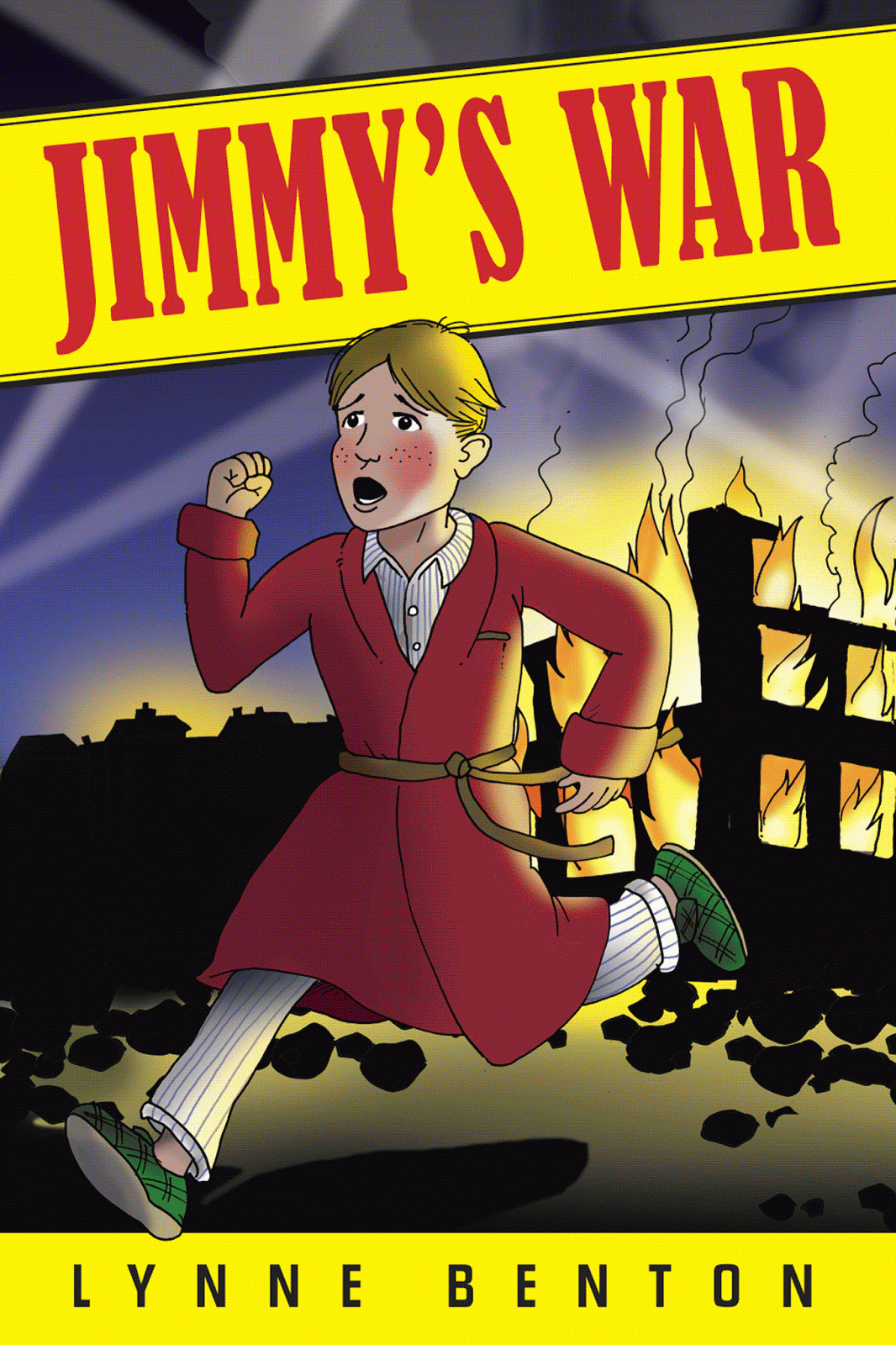
Jimmy's War by Lynne Benton

Reviewed by Jackie Marchant


Here is a terrific book about World War II – written in the easy to read flowing style perfect for younger readers, yet still able to bring across the terror and heartbreak that children faced during the war.  A book I enjoyed reading and would heartily recommend – as long as you have a kindle.

This is another example of a book that has been self-published because mainstream publishers wouldn’t take a punt on it.  I don’t know why – perhaps it’s because World War II isn’t considered marketable at the moment.  There is absolutely no reason why this should not have been published – it’s as good as any other war-time story I’ve read for that age group.

But back to the book.  Here we have eleven year old Jimmy, whose father told him to do look after his younger sister and do as his mother says – then left to go to war.  That was over a year ago and now his mother’ had the dreaded ‘missing presumed dead’ telegram.  Now the children have the chance to be evacuated to Cornwall but, wracked with grief, his mother can’t bear to let the children go – they are all she has left.

The consequences of her decision are disastrous, leaving Jimmy with the task of taking his young sister Molly away from their bombed out house and finding their way to an aunt in Somerset.  With barely enough money for the fair and their possessions packed into pillowcases, the children set off.  Now the descriptions of two lost children come into their own as we are taken on a gripping, heart-in-your mouth adventure, in which young Jimmy takes on the responsibility of looking after Molly while keeping a terrible secret from her.  As a consequence the lies keep piling up, then the frustration at Molly’s questions turns to guilt at his annoyance with her.  For Molly is an endearing six year old with a furry rabbit she can’t do without. 

I don’t want to reveal too much, but I will say that, after a lot of trials and tribulations, the ending of the book is positive.  I won’t say it is happy ever after, because that would be unrealistic – this is a book about war and happy endings were rare.  And this book, despite its gentle tone, deals realistically with the horrors of war.

It’s a good read and I can recommend it.


Return to REVIEWS HOMEPAGE

Wednesday, 13 August 2014

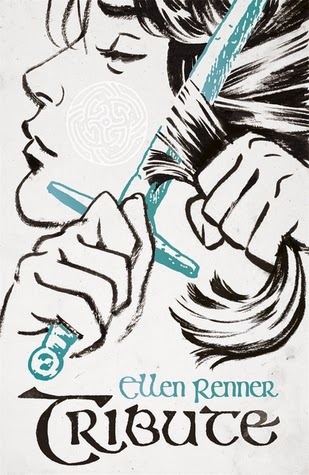
TRIBUTE – by Ellen Renner

Reviewed by Jackie Marchant


This is heart in your mouth, gripping stuff.  From the first page, you know that its herione Zara faces impossible odds and, even worse, her deadly enemy is her own father, Benedict.  But, rather that the ever popular feisty gung-ho heroine,  Zara is a girl beset by fear rather than confidence.  She doesn’t appreciated her own abilities, and is all the more likeable for it.  She is in a terrible situation – her mother died  because she didn’t agree with Benedict, her beloved Tribute child was ruthlessly killed by him and the only thing that stops him from killing her is the fact that he thinks he can mould her into the daughter he’d like. 

But Zara has been spying for the Knowledge Seekers, who oppose her father.  If he finds out, the consequences will be terrible, yet she has no choice, if she is to free the world from his tyranny.  At the same time, she is his daughter, a mage like him and therefore hated by those she wants to help. 
And then along comes one of her father’s enemies, a Maker from beyond the Wall – a young lad who holds an immediate attraction for her.

This is set in a complex world, beautifully drawn.  The characters are real, their situation desperate.  it is a world where mages give themselves a godlike superiority, where everyone else is considered ‘Kine’ and treated like cattle.  The firstborn of all kine are snatched away to become slaves, or Tributes.  It’s in this harsh world that  Zara battles her own self-doubts, plus the doubts of those who despise her because she’s a mage.  She also has to keep one step ahead of her forbidding father, because he absolutely must not find out that she is spying on him.  He’s one of the nastiest villains I’ve come across.


All this leads to a great page-turner, beautifully written.  And the good news is that there will be a sequel – Outcaste.  


Return to REVIEWS HOMEPAGE

Saturday, 14 June 2014

Helen's Daugther - by Frances Thomas

Reviewed by Jackie Marchant


The first thing I’m going to say about this book is that it is self-published.  That’s one of those expressions that used to get me wondering – why hasn’t this book been picked up by a traditional publisher?  I have to be honest, the term  ‘self-published’ used to set alarm bells ringing.  I expected something amateurish which immediately answered my question – it wasn’t good enough, the poor author deluded into thinking publishers were wrong not to take it on, etc, etc.  It used to be normal for self-published books to be very much second rate.

But there is a new breed of self-publishers emerging.  Those who are already published, who have proven themselves capable of writing good books, but find themselves at the mercy of publishers who feel their work is not ‘commercial enough’.  These are books that would probably sell well, but now that publishers have to shift  ever increasing numbers to make a profit, that is no longer enough.  The result is a whole lot of wonderful books that are not being traditionally published.  This is one of them.

Helen’s Daughter  is the first in a three part Girls of Troy series.  It is written from the viewpoint of Helen’s daughter Hermione, who is whisked away to live with her uncle Agamemnon, after her furious father Menelaus learns that his wife Helen has absconded to Troy with her lover, Paris.   While the fascinating story of Helen and Paris and her furious husband’s resolve is all there, the focus stays with Hermione and the effects these events have on her.   This gives the story a delightful blend of myth and reality, where the world of ancient Greece is depicted so well that you feel like you are living the story with Hermione.

The story starts with a frightened young girl in the back of a cart, being taken away from everything she knows.  It deals with growing up in a world that is very limiting to girls, while the events happening around can be terrifying.  It is also a coming of age story and deals with friendship and first love.   Bearing in mind the events that were going on at the time, there are some shocking moments in this, but they are beautifully handled.  It is a well-written book told through a heroine who might not be gung-ho and kick-ass, but has a subtle inner strength that makes her all the more likeable. 


This is a book that deserves publication and I hope the self-published venture pays off.


Return to REVIEWS HOMEPAGE

Tuesday, 15 April 2014

The Hobbit - by J R R Tolkein

Reviewed by Jackie Marchant


I re-read this wonderful book recently, and not for the first time.  I think that was when I was about 10 – the first re-read I mean.  I don’t remember my first read, only that it’s a book I love reading and will probably do so many more times. 


It’s been described as the gateway to fantasy.  I couldn’t agree more – partly because it’s the gateway to another, bigger fantasy, which has become mother to them all, but it’s also the first book I read that made me think this is a fantasy.  It’s what the fantasy genre is all about – and I don’t mean strange worlds with strange creatures.  


This is a different world, but it’s realised so perfectly you accept it without issue; its peoples and beings are not of our own world, but belong so easily here that you don’t question them.  The characters and the adventures they have belong utterly in that world – yet they are perfectly easy to relate to.  We live in the story as we live in the world of Middle Earth.


I have to admit that the reason I chose to read it again, was because of the films.  When the first one came out I kept thinking – was that in the book?  Will this really last another two films? 


Three long films from one book – impossible.  Yet, reading the book, there is so much packed into Bilbo’s adventures, it’s easy to see how Peter Jackson was tempted to spin out the action.  And, for reasons of political correctness, I might be able to forgive him for inventing a kick-ass female elf – although I could have done without the attraction between her and the dwarf. 


The films are highly entertaining with special effects begging for 3D.  But, despite being prequels to Lord of the Rings, I couldn’t help feeling that these were sequels – the sorts that have numbers 4, 5 and 6 after them, ie more of the same, but not as good.  These films fell far short of the Lord of the Rings trilogy.  Why?  In short, because they put too much in that was not in the original.


But back to the book.  If you’ve not read it and are relying on the films, then I urge you to visit this wonderful book.  It needs no 3D embellishments to make it stand out – just a great story, brilliantly realised setting, breathtaking adventure and good writing. It’s stood the test of time, as is evident by the myriad editions I could have chosen to illustrate this review – I’ve only managed a few of them.


Return to REVIEWS HOMEPAGE