Showing posts with label YA fiction. Show all posts

Wednesday, 15 January 2020

THE GREY SISTERS by Jo Treggiari. Review by Katherine Langrish.

Hello! Back in the early December rush, this review filled an unexpected gap. I alwways felt it deserved a full span of days, so here it is again - with a cover that matches the grey weather outside my window.

Today AWFULLY BIG REVIEWS once again welcomes the author Katherine Langrish as a Guest Reviewer, with her review of THE GREY SISTERS, an atmospheric, character-driven YA thriller by Canadian writer Jo Treggiari.


The Grey Sisters - By Jo Treggiari (Hardcover) : Target

D and Spider have always been friends, but became even more closely united in grief when a plane carrying both their siblings crashed on The Grey Sisters, a three-peaked mountain towering ruggedly from the Canadian backwoods. Two years on, D spots in a news photo her sister’s cuddly toy tucked into the pillow of the crash’s sole survivor, a flight attendant recently woken from coma. Spurred into action, she sets out with Spider and their friend Min to visit the crash site on The Grey Sisters and perhaps find closure. But there’s growing disquiet as the girls drive their unreliable old VW wagon past squalid settlements in the wild, unfriendly woods to reach the bleak mess of the crash site.
Once she’d trained her eyes to see through the tangled undergrowth [Min] caught glimpses of RVs tucked under the trees, a cluster of dilapidated houses no bigger than her parents’ goat shed and so derelict they seemed uninhabited, a few tiny shacks covered with tar-paper, which she guessed were outhouses, many abandoned sites strewn with bags of garbage, old refrigerators and wrecked cars. No one sitting on porches or working on their cars. She wondered if they were standing behind the curtains watching the VW go by.

…They almost missed it. At first glance it looked like another abandoned site, a dump of moldy papers and assorted garbage, but Min spied a thicket of wooden crosses marking the head of a dirt road leading through the trees. ‘Stop. Right here,’ she called. D pulled over and they got out.

It was a mess.

People had come here with their white candles and prayers and their tears, but now all that remained was what they’d left behind. Brightly coloured plastic flowers trodden into the dirt, photographs too rain-soaked to identify, pinwheels and lots of toys.
Without knowing it, the three girls are running into danger. The Grey Sisters is home to a survivalist, militarist cult called Avalon, run by a leader known as Big Daddy who keeps his people isolated and teaches them to prepare for the apocalypse. Women in the cult are either warriors or ‘cows’, used for breeding; babies are sold to buy guns. Ariel has lived in the cult all her life and distrusts outsiders, but desperate to save her friend Aaron who’s been savaged by a bear, she descends the mountain for help and encounters D, Min and Spider. Then the three newcomers pitch camp not far from Big Daddy’s compound – and Min disappears. Heart-stopping adventures ensue.
I read this book in a single sitting. It’s gritty, fast-paced, with a wonderful sense of place. Most of all I love the courage of its four resourceful, active heroines as they take on Big Daddy and his armed warriors, the brutish Uncles. 

 THE GREY SISTERS by Jo Treggiarri  is published  by Penguin Random House/Penguin Teen Canada 2019 . It is available from Thursday 5th December in hardcover (£14.99) and as an e-book from amazon.co.uk
Novels: The Troll Trilogy Katherine Langrish is the author of several notable childrens books, including the TROLL FELL trilogy.
She also writes wonderful posts about myths, fairytales and folklore in her own blog SEVEN MILES OF STEEL THISTLES:   https://steelthistles.blogspot

Her current post is  on the theme of the "Grey Sisters" in all their many appearances.
A selection of Katherine's earlier Steel Thistles articles, expanded, is available in print and e-book format from Amazon.
Non-Fiction 


Return to REVIEWS HOMEPAGE

Saturday, 5 October 2019

That Asian Kid by Savita Kalhan. Reviewed by Emma Perry


This fast-paced, heart-in-my-throat type novel is set to be one of my top reads from 2019. And I've read a lot this year. Lots.

Meet Jeevan, the protagonist of Savita Kalhan's That Asian Kid. He's getting ready for his exams at school. He works hard, has a good group of friends and a lovely family, but, English classes really aren't going well. Not well at all. Try as he might he just can't seem to be able to get his grades up in Mrs Greaves' class.

Then things take a very unusual turn. During his normal short cut through the woods Jeevan hears two familiar voices amongst the trees. Mrs Greaves and Mr Green, the later being his favourite teacher. Jeevan overhears them talking about a complaint that's been made against Mrs Greaves - an anonymous letter claiming that she is racist.

That's when Jeevan switches his phone to record.

That's when the teachers take their relationship further, despite Mr Green being married... and while the camera continues to record.

Oh!

As the novel unfolds Jeevan has got to search deep, really deep, to decide what the right thing to do is. But it not quite that simple. Whilst Mr Green shows empathy and compassion towards all his pupils, including Jeevan, things with Mrs Greaves go from bad to worse. It's clear that her treatment of him is wrong, prejudiced and grossly unfair.

From this point on I need to be careful, I don't wish to include any more plot points for fear of spoilers! This is a plot that moves at a gripping pace, you are going to love it.

That Asian Kid has lots to recommend it - it deals with social media in a non-preachy manner. What can you do when the adults around you are NOT doing the right thing. 'Tricky situation' only begins to sum up the spot Jeevan finds himself in.

"until now, I've not given much thought to racism, because I thought discrimination was something that happened to other people. Not to me."

I'm now off to pick up Savita Kalhan's other novels - The Girl in the Broken Mirror & The Long Weekend. I'm hooked.


Twitter: @savitakalhan


Emma Perry is a children's author, Primary School teacher & founder of MyBookCorner.
www.emmaperryauthor.com
Twitter: @_EmmaPerry 
Instagram: @EmmaPerry


Return to REVIEWS HOMEPAGE

Friday, 5 August 2016

LIBERTY'S FIRE by Lydia Syson. Reviewed by Ann Turnbull.


In this powerful and complex novel Lydia Syson brings to life the three months of the Paris Commune of 1871.

Four young people living in Paris come together in a story of war, revolution and comradeship: Anatole, a violinist, shares an apartment with Jules, an American photographer, and pays for his room by modelling for photographs; Marie, a colleague and friend of Anatole, is a beautiful young singer at the opera, hungry for success and anxious about the fate of her soldier brother. Into their lives comes Zephyrine, who used to work for a living but is now destitute.

When we first meet Zephyrine, she is on the brink of prostitution as she attempts to earn some money to pay for a proper funeral for her grandmother who, like many others, has died of starvation during the siege of Paris. She is rescued by Anatole, and their growing love for each other forms the core of the first half of the book as Zephyrine draws Anatole into the heart of the city's revolutionary fervour.

Although the rise and fall of the Commune is a dramatic setting, it's the characters in this story who make it so compelling that you become desperate to know what will happen to them. In particular, the subtle interplay of relationships and unspoken feelings between Jules, Anatole and Zephyrine are described with delicacy and care and without a false note. I love all Lydia Syson's novels but I think this one is my favourite because the characters are so interesting. Add to that the bohemian lifestyles and the excitement of the people's uprising and you have the perfect mixture.

This is historical fiction at its best: opening a window on the past and showing a moment that has echoes and resonances with our own troubled times.

Return to REVIEWS HOMEPAGE

Wednesday, 27 April 2016

Bone Gap by Laura Ruby: reviewed by Sarah Hammond

Laura Ruby’s teen novel is set in Bone Gap in rural Illinois, a place that everyone knows "had gaps just wide enough for people to slip through, or slip away, leaving only their stories behind."  Brothers Finn and Sean are only too aware of people slipping away: their father died, their mother ran away to Oregon with an orthodontist leaving them to fend for themselves, and the story begins just after Roza, Sean’s beautiful girlfriend, is kidnapped by a mysterious man at a local fair. 

Finn is the only witness to the disappearance of Roza, but his description of the alleged kidnapper as moving "like a cornstalk in the wind" is frustratingly inadequate. The searches reveal nothing. Roza becomes another person who is lost through the gaps, leaving a rift between the two brothers behind her. 

Yet just as we gradually learn that neither Finn’s strange vagueness, nor the odd disappearances in Bone Gap are quite what they seem, neither is the novel itself. Although we follow the vivid, realistic, well-drawn lives of the people of small-town America —  the local eccentrics, the sassy beekeeper, the bullies —  another story begins too. This story reveals Roza, trapped in an increasingly fairy-tale-like world by her strange captor and desperate to find her way home. 

And this magical world begins to spill into Bone Gap. A black racehorse appears at Finn’s house without explanation, taking him on rides through unrecognisable landscapes, over strange cliffs in the middle of cornfields. We begin to notice subtle sprinklings of Greek mythology. Roza’s garden wilts and dies in her absence. When Demeter’s daughter, Persephone, was dragged by Hades to the underworld against her will, didn’t Demeter let the world go barren in her absence? Didn’t Demeter also take the form of a black-winged mare? 

Other questions emerge, too. How important is beauty? Petey, Finn’s new girlfriend, is seen as conventionally ugly yet Finn does not notice. Some of my favourite scenes show the pair falling in love, making up increasingly ridiculous college essays “Describe someone who has had the biggest impact on your life using only adverbs”, “Tell us how you feel about Thursday - is it better or worse than Tuesday?” Roza is kidnapped for her beauty, yet this is not how Finn ultimately recognises her, and Sean’s first drawing of his girlfriend was of her hands. 

And what of abandonment? Who is at fault when someone leaves? Alongside the mysterious story of Roza's abduction, many characters are alone or have missing family members. In learning to heal and move forwards, who rescues whom? 

Bone Gap won the 2016 Printz Award for Excellence in Young Adult Literature in the U.S. and was published in the U.K. in April 2016. It is a well-written, thought-provoking novel that encompasses realism and myth, changes in worldview, abandonment and rescue, and, ultimately, questions how we see those we love.

ABOUT THE AUTHOR

Laura Ruby writes fiction for adults, teens and children. She is the author of the newly-released YA novel Bone Gap as well as the Edgar-nominated children's mystery Lily's Ghosts, the ALA Quick Pick for teens Good Girls (2006), a collection of interconnected short stories about blended families for adults, I'm not Julia Roberts (2007), and the forthcoming middle-grade trilogy York. She is on the faculty of Hamline University's Masters in Writing for Children Program. She makes her home in the Chicago area. 

You can find her online at:

web: www.lauraruby.com
twitter: @thatlauraruby


ABOUT THE REVIEWER

Sarah Hammond is a writer for young people. She has published a picture book, Mine!, and a teen novel, The Night Sky in my Head, which was short-listed for four awards in the UK. She is a Brit abroad, now living happily in Chicago, with strong ties to the UK which regularly pull her back across the Pond.

You can find her online at:

facebook: SarahHammondAuthorPage

twitter: @SarahHammond9


Return to REVIEWS HOMEPAGE

Thursday, 23 October 2014

The Firebird Trilogy by Nick Green reviewed by Julia Jones


I've just read the three parts of Nick Green's Firebird Trilogy as one big book. It's been a terrific experience and I'd happily go back to the beginning and start again.

Project FirebirdLeo Lloyd Jones is a teenage joy-rider from Salford who is picked – accidentally, he assumes – to be part of an elite group of youngsters who might be required to rehabilitate the world in the case of cosmic catastrophe. This is Project Firebird. Now I don't normally do much in the way of cosmic catastrophe and my appetite for dystopias is distinctly limited. But I love adventure and stroppy teenagers and their capacity for moral decisions and courage and emotion and idealism and that's what Project Firebird gave me.

Leo's quality is leadership, the indefinable sort which is something quite different from ambition or the desire for power. Most of the time he's completely unaware of it but when push comes to shove he's usually able to make the right choices and find the words to inspire others. On his first day at Project Firebird he is sitting next to fourteen year old Rhys Carnavon, the fit, good-looking ' natural leader' who has just trekked back from Antarctica after witnessing the death of his scientist father. The shifting relationship between Leo and Rhys is a main plot strand running throughout the trilogy. It's complex, does not allow for second guessing and has a resonance beyond the individual characters. It's one of the reasons I'd like to read the trilogy again.

Plotting is excellent throughout. For me the books really began to sing at the shift between volumes one and two, Project Firebird to Firebird Dawn. The shock at the beginning of the second volume was, I thought, brilliantly managed – especially when an unexpected twist and additional layer of complexity was revealed later in the book. Another welcome moment was the emergence into the open air. Nick Green seems to be particularly good at evoking effects of light on landscape and glistening natural beauty. Not that the post-disaster countryside is uniformly lovely: there are methane flares from pockets of rotting garbage and a glimpse of a survivor spending his (short) life melting down abandoned plastic. One imaginative insight I especially enjoyed was Leo's occasional sense of his 'own' landscape – Salford, Manchester, the M6 motorway – buried a thousand years below the landscape on which he and his friends are struggling to survive.

There's cruelty and loss in this second volume but I feel somehow that it's the most human of the three. That's a descriptive not an evaluative point. The mainly female Blackwater village, the ruthless Dustral raids are small scale in comparison with the brutalities and stark struggles for existence in the final volume Firebird Radiant. That's fine. I think trilogies should work rather like symphonies with themes introduced, developed and brought to some resounding climax. AS such, however there the obvious danger or predictability and one of Nick Green's clevernesses in his third volume is to counterpoint the megalomaniac’s bid for global domination with the intimate domesticities of broken nights and nappy changing.


There are thrilling action sequences, delicate moments of relationship and some extraordinarily fine descriptive writing throughout the trilogy. There's also plenty of intellectual content and much to reflect on and discuss in our management of the natural world. I rather hope that we are sufficiently co-operative to establish a Global Seed bank to preserve crop varieties – currently I hear more about fragmentation and restrictive patenting. These books could be offered to consumers of The Hunger Games or Malorie Blackman's Noughts and Crosses. Instead each volume is available for £1.85 on Kindle. I don't think this is ideological statement: I think this is 21st century publishing's failure.


Return to REVIEWS HOMEPAGE
Sunday, 5 October 2014

The Blade Itself, reviewed by C.J. Busby


The Blade Itself is written for adults, but it's a book that might also be enjoyed by older teenage readers, especially any who are fans of G.R.R. Martin. I picked it up almost by accident from my sister's shelf while visiting this summer. She is an extremely discerning reader of fantasy and sicfi and I always trust her judgement, so I knew it would be good. But I wasn't prepared for just how good.


The Blade Itself is the first book of a trilogy set in an alternative world but one that is reminiscent of medieval Europe, albeit with a very different history. There are no maps, so my sense that I almost recognised the topography and names (Angland? Midderland? The southern, oriental-type empire called Ghurkul?) added a certain resonance, but also left it all nicely vague. The world is one that has a recognisable kinship with G.R.R. Martin's Song of Ice and Fire - swords, men at arms, politicking, and scepticism about the apparent reappearance of old magic. But it's not derivative - for all the inevitable resonances any epic fantasy has to other epic fantasies all the way back to The Lord of the Rings, Abercrombie's world is original enough to really engage the reader, and what's more important, his writing is cracking.

The story is told from the viewpoint of a number of different characters, and I loved all of them - whether it was bitter, twisted torturer Sand dan Glokta, vain, lazy, aristocratic Lieutenant Jezal dan Luthar, the tough northern barbarian fighter Logan Nine-fingers (also known as the Bloody Nine), the seasoned northern scout, Dogman, or the long-suffering army stalwart, Major West. Each has a distinct voice, and although the threads intertwine, each also has a distinctly interesting journey and their own sub-plots to follow, so I greeted each change of chapter/voice with the sense of excitement of catching up with a really interesting old friend.

But it's not just the characters - Abercrombie's writing is sharp, clever and above all funny. I like my fantasy laced with a decent amount of self-deprecation and deadpan humour, so for me this was the best aspect of the book. Despite some very dark moments, gritty realism and a lot of blood, it also had me laughing out loud in parts. Sand dan Glokta has a nice line in bitter sarcastic humour, while Luthar is unwittingly funny just because he's totally lacking in self-insight. Nine-fingers, as well as having the ability to eviscerate an opponent on autopilot, is master of the one-line put down. There are also some nice moments where Abercrombie subverts the usual fantasy fare - the powerful wizard who's drawn Logan down south turns out not to be the white-beaded old sage standing by the front door, but the person Logan barely glanced at - the stocky butcher with blood half-way up his arms, dissecting an animal in the yard below.

The plot follows a lot of disparate strands, all, like the characters, with their own fascination, and there's an underlying sense that all of them are going to turn out to be interrelated. There is an empire on the move in an unholy alliance with dark magical forces, a conspiracy needing investigation at the heart of the corrupt, class-ridden central Union, a wizard who apparently still lives hundreds of years after he first made an appearance in the Union's mythology, and some violent orc-like creatures overrunning the Union's northern borders. It's a full-scale adventure, and one that's very hard to put down. I had to stop after book two of the trilogy because I had my own pressing writing deadline to make, but as soon as I'm done I'll be diving into the last book.

The Blade Itself is gritty, bloody, and there's a lot of politics to keep up with, so I wouldn't recommend it to those under 16, but there's nothing that would worry the older teenager. There is a lot of swearing. But you probably hear worse on an average secondary school bus...

So, in return for all the great reads we adults have had from YA fiction, here's one that crosses over in the other direction: older teenagers (and adults), I give you Joe Abercrombie. Enjoy!


C. J. Busby writes fantasy for 7-12. Her latest book, Dragon Amber, is out with Templar: the first in the series, Deep Amber, was published in March and has been shortlisted for the Stockton Book Award..


"A rift hopping romp with great charm wit and pace" Frances Hardinge on Deep Amber

www.cjbusby.co.uk

@ceciliabusby

Return to REVIEWS HOMEPAGE

Sunday, 20 July 2014

Glimpse by Kendra Leighton, Reviewed by Tamsyn Murray

I do love a good ghost story. And Glimpse by Kendra Leighton promises a lot. It's the story of Liz, a girl who has had more than her fair share of troubles in her sixteen years of life, and her battle to overcome the terrifying visions - the Glimpses - that plague her. When Liz and her father inherit The Highwayman Inn and move into its time-worn rooms, she hopes it will be a fresh start - the chance to leave the Glimpses behind and become normal. But it soon becomes obvious that Liz hasn't left anything behind her. The Glimpses have followed her and they are angrier than they have ever been.

Struggling to make sense of what is happening, Liz befriends a boy called Zachary, who tells her he can help her to understand why she is under attack and asks for her help in locating his missing girlfriend, Bess. But the Glimpses don't want her to uncover the truth and they will stop at nothing to ensure Liz stops digging around. Can Liz put the pieces of the puzzle together and help Zachary to find his lost love before the Glimpses manage to silence her forever?

Based on the poem The Highwayman by Alfred Noyes, Glimpse is part mystery, part ghost story with more than one haunting tragedy at its heart. It's a clever, modern-day re-imagining of the classic poem, with a twisting plot that will keep readers guessing. I worried for poor Liz, falling head over heels for an unsuitable boy, and wanted to hug her when she thought about her dead mother. Most of all, I wanted her to find happiness and I couldn't for the life of me see how that could happen until the very last pages, when the mystery is finally revealed. Those last few chapters whizzed by and I really couldn't read them fast enough - I had to discover what had happened to Bess, and what would become of Liz and Zachary. I wasn't disappointed.

I found Glimpse to be an accomplished debut and a cracking ghost story. I would recommend it for readers aged 11+

Return to REVIEWS HOMEPAGE

Saturday, 30 March 2013

'Everybody Jam' by Ali Lewis: reviewed by Rosalie Warren


This fab book takes us to the heart of Oz for a blast of life in the out back with a boy called Dan, and deals with grief and loss as well as the trials of young Liz, the Pom who has come to help out on the farm. 

Sorry if that opening sounded a little stilted, but I was setting myself the challenge I woke up to on Radio 4 this morning - of summarising a book in a single sentence, using words of only one syllable. OK, so I cheated a bit by splitting 'outback' into two words - but other than that I think I've covered the essentials.

 Dan (or rather Danny) is thirteen and lives on a cattle station near Alice Springs (actually 200 miles away, but it's the nearest town of any size...) with his parents and two sisters, one of whom, Sissy, aged fourteen, is pregnant. A tragedy hangs over the family: about a year ago Danny's older brother Jonny died in a terrible accident. Danny can't find anyone who wants to talk about Jonny. The family avoid mentioning him, while struggling on as best they can, trying to make ends meet and looking after their cattle on the drought-stricken land.

'The Pommie' arrives - Liz from England, who Danny's father says speaks like the Queen and is far too weak and skinny to do anything useful around the place. She can't even, it seems, make breakfast for the family without nearly burning the house down. And when she tries to drive one of the utes it's another near-disaster. In Danny's opinion she should be sent straight back to where she came from. But the Pommie is tougher than she looks and before long she has grasped the principles of life on the cattle station and is pulling her weight. Not only that, but she asks Danny some questions about Jonny, his dead brother, and opens up the way for him to begin to talk about his loss.

There is plenty more going on. Danny is given an orphaned young camel to rear - the boisterous Buzz, who gives Danny some worrying moments but also provides him with a job that's all his own. Danny is helping with the cattle muster (round-up) for the first time this year, and is determined to make a good job of things and to honour the memory of his brother.

We also learn about the relationships between Danny's family, the neighbouring white farmers and the aboriginals who live nearby. And there's a challenge for Danny's dad when he discovers the identity of the father of Sissy's baby.

This is a coming-of-age novel with a difference. From page one the reader is plunged into what for me was the wholly unfamiliar world of life on an Australian cattle station. But Danny's voice and personality quickly make us feel at home there. He has a wonderful way with words and his descriptions had me laughing out loud at times. Yet there's real feeling too - a boy who has lost his brother and feels unable to talk about it with anyone else. And the young woman Liz (who I'm guessing from the Acknowledgements may be based just a little on the author's own experiences in Australia). Seen through Danny's eyes, she makes ridiculous and hilarious mistakes, but she engages our sympathy from the start and it's impossible not to see the story from her perspective.

To my surprise, the 'Everybody Jam' of the title turns out to be a noun phrase, not a command. You'll have to read the book to find out what it means.

Danny is a tough lad with a heart, and his story made me both laugh and cry. This is a book for age 12+, I'd say, and should appeal to both boys and girls. And grown-ups...

I'm hoping to see more from Ali Lewis.


Book details:
Title: Everybody Jam
Author: Ali Lewis
Publisher: Andersen Press
Publication Date: 2011
ISBN: 978 1 84939 248 8
*** Unsuitable for younger readers***


Happy reading,
Ros

My blog
My website
My Facebook author page
My alter ego, Dr Sheila Glasbey 
Follow me on Twitter @Ros_Warren  


Return to REVIEWS HOMEPAGE

Friday, 19 October 2012

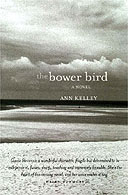
More about Gussie! Ann Kelley's 'The Bower Bird', reviewed by Rosalie Warren


The Bower Bird by Ann Kelley

Recommended reading age: 12+

Ann Kelley's books about Gussie (Augusta) Stevens deserve, in my opinion, to be much, much better known and much more widely read.

Gussie, aged twelve, is waiting for a heart and lung transplant. She suffers from pulmonary atresia, which means that her blood is insufficently oxygenated and her skin, as a result, is purple or sometimes even blue. She has difficulty walking very far and she can't go to school in case she picks up an infection.

But Gussie's life is as far from dull and restricted as it's possible to be. She lives in St Ives with her mum and is a keen (and amusing) observer of all the human, animal and birdlife in and around the town. She has three cats, including Rambo the Terrified, who runs for cover every time someone stands up. From her attic room, Gussie watches the herring gulls nesting and bringing up their young - including the one who stubbornly refuses to leave home. 'Only a parent could love an adolsecent gull,' Gussie comments. We also hear about the lizard in the terrarium - the one with SED (sadistic eating disorder), which Gussie eventually sets free because she can't bear to see him slowly work his way through any more half-alive grasshoppers.

Gussie is funny. Her story is unbearably moving at times, partly because it's told without sentimentality or self-pity. Gussie is pragmatic. She may only have a year or so left to live, so she's determined to make the most of every moment.

She tells us about Brett, the young Aussie guy she's fallen in love with. We hear a lot about Mum, who capitalises her words, saying things like: 'There's Nothing Wrong with Mouse' [the colour of Gussie's hair]. Mum, apparently, is not very good at talking to Gussie, except to tell her not to do things. As adult readers we get telling glimpses into the life of Capitalising Mum - and just a taste of what it might be like to have a daughter like Gussie to cherish and worry constantly about. Mum has managed to provide her daughter with the perfect environment for her personaility and condition. Dad, a photographer and film-maker, has left them for TLE ('The Lovely Elise') and lives in London. Gussie is keen to trace her family on her dad's side. There are lots of Stevenses in St Ives and we see her start to get to know some of them and discover family connections.

Gussie's descriptions are so apt and beautiful they sometimes hurt. How about (from p.18): 'The sea is hammered pewter and the low waves are mercury creeping up the beach'? Too precocious and 'poetic' to come from a 12-year-old? Well, no - not if you read it in context. Gussie's voice is very much her own. An unusually clever and well-read 12-year-old, yes, but a 12-year-old just the same - ordinary (in many ways), likeable, outgoing, curious about everything. How does Ann Kelley do it? Perhaps, when I read this book for the fourth time, I'll finally get down to studying her technique, rather than simply being enthralled. Perhaps...

Gussie is now on my own personal shelf of favourite characters from books. She's up there with Moomintroll, Just William, Jo March, Dorothea Brooke, Holden Caulfield, Paddington, and Ramona Quimby. Characters I Would Like to Meet and Be Best Friends With...

There are four Gussie books. At the end of this one, The Bower Bird, a set of heart and lungs becomes available and Gussie is rushed off, at Christmastime, to hospital in London to have her transplant. In the next one, Inchworm, we hear from Gussie about the transplant and its aftermath. And in the fourth one, A Snail's Broken Shell, she tells us what it's like finally to have pink skin and be able to go to school. As you might expect, she has many new challenges to face. She also meets the family of the young woman who died, whose heart and lungs are now working inside Gussie's body. Here Ann Kelley's touch, as always, is perfect.

The Bower Bird was a category winner in the 2007 Costa Book Awards, and it's not difficult to see why. What I don't understand is why these books aren't more widely known and read. They have much to offer to both youngsters and adults. They are absolutely not 'aimed at' youngsters with heart problems, though they might well have particular relevance to such young people and their families. But they are quietly funny and their observations of parents and grown-up life (as well as seagull life) are spot on.

My copies are getting tatty. Need I say more? Please read, enjoy and recommend them widely.


Publisher: Luath Press Ltd (10 May 2007)
ISBN-10: 1905222793
ISBN-13: 978-1905222797
View 'The Bower Bird' on Amazon UK

Happy reading,
Ros

My blog, Rosalie  Reviews
My Facebook Author Page
My webpage
Follow me on Twitter @Ros_Warren


Return to REVIEWS HOMEPAGE

Thursday, 13 September 2012

'The Burying Beetle' by Ann Kelley, reviewed by Rosalie Warren

[Recommended age: 10+ approx]


I can't remember how I came to stumble upon The Burying Beetle. It was first published in 2005 and I missed it completely at the time. This may have been because it predated my current interest in YA fiction, or perhaps it did not receive a great deal of publicity, being published by Luath Press, one of the smaller publishers.

But oh boy - am I glad I found it. And not just The Burying Beetle but its two sequels, The Bower Bird and Inchworm, at least one of which I plan to review on here soon.

The protagonist is Gussie Stevens, aged twelve. Her story opens on August 11th, 1999, which, you may or may not remember, was the date of the total eclipse of the sun, viewable in totality from Cornwall. The eclipse is significant to Gussie, partly because it happens on her twelfth birthday but also for reasons far deeper, all connected with her recent move to St Ives with her mother and her growing interest in the bird, animal and human life of the area.

Gussie is a contemplative girl - a keen reader and observer. This is forced upon her to some extent by her condition - she can't get around very much. The older and bigger she gets, the more her heart has to struggle. When she was young, she could run and jump, but now it's difficult to walk very far without getting out of breath and exhausted, owing to her medical condition, pulmonary atresia, which means that she lacks a pulmonary artery and her blood is receiving a lot less oxygen than it needs.

The condition is fatal for some, but Gussie has, if I've understood her correctly, compensating defects in her circulatory system which mean that her blood does get some oxygen, allowing her to live a rich and interesting, if somewhat restricted, life. Gussie's observations of her three cats, as well as the local gulls, beetles, mice, dolphins, seals and humans, made me smile as well as teaching me a lot. Her attitude towards her illness is never self-pitying - she deals with it in a matter-of-fact way which is not only inspiring but deeply moving at times. Her relationship with her mother is drawn finely and with conviction. You can't help loving both of them, and the cats and other creatures too (especially the grouchy adolescent gull who refuses to leave home!).

Gussie can't go to school because of the risk of picking up infections. She's lonely, of course, and she misses her London life, but soon she starts to make friends with a number of local residents and discoveres that her father (still living in London, now with The Lovely Eloise) has relatives in the town. Slowly, St Ives becomes home, and Gussie shares with us her observations of the seashore in all its moods. She's not afraid to tell us about the anger and jealousy she feels at times, and about her grief over the loss of her grandparents. Altogether, this is a profound, thoughtful and convincing book. But don't go away with the impression that it's heavy and sad, because it's not. Gussie has a tremendous love of life and is determined to make the most of however much (or little) of it she has left.

I think there is something for every age here. Ann Kelley says she does not write for children but for readers, and that shows through every page. She also tells us that Gussie's story is partly based on that of her own son, who also had pulmonary atresia. That helps explain why she gets it all (as far as I can tell) so 'right'. But she is a fine writer, too, and her love of Cornwall and its wildlife brings the story alive.

Highly recommended, for any reader of 10+.

Title: The Burying Beetle
Author: Ann Kelley
First published: 2005
Publisher: Luath Press
Amazon UK link

Happy reading!
Best wishes,
Ros

My webpage
My blog, Rosalie Reviews
My Facebook author page
Follow me on Twitter @Ros_Warren


Return to REVIEWS HOMEPAGE

Sunday, 5 August 2012

'Saving Daisy' by Phil Earle, reviewed by Rosalie Warren

Please note that this is a teen/YA novel and contains material that may be unsuitable for younger readers.
 

Earlier this year, I reviewed Phil Earle's Being Billy on this site, and promised to return with his second YA novel, Saving Daisy, which is loosely linked to the first. So here is my review of Saving Daisy, which I have to say I enjoyed even more than Being Billy.

Both of these are hard-hitting YA novels, featuring young people with painfully difficult lives. As I said in my first review, it took me a while to 'get' Billy - probably no fault of the author but simply that Billy's background is a world away from my own. But Daisy was a different matter. I connected with her from the first few paragraphs - partly, perhaps, because of already having met her in Being Billy, but mainly because our personalities just clicked. Fourteen-year-old Dasiy has a problem - well, she has many problems, but right at the centre is a seething mass of poisonous guilt. Daisy blames herself for the death of her mother and has, she believes, the evidence to prove it.

Dad, although well-meaning, gives little help. He misses his wife so much he can't bear to speak of her. When Daisy asks him to look in the loft for photos of her mum, he refuses. Daisy has no other relatives and no chance to share her fears with anyone else.

At school, Daisy keeps her head down, for fear of being noticed and bullied. She's a bright girl who successfully hides her intelligence much of the time. But someone notices her and it seems, at first, that he can help. Daisy confides some of her fears and makes a friend. But then, in a frightening twist, everything is turned on its head and she's in a worse mess than ever, with even more guilt (she believes) to shoulder.

Daisy's slow and painful emergence from this state constitues the rest of the book. I don't want to give away too much, except to say that Phil Earle's experience of working with troubled and abused young people shines through every page. As far as I can tell, he is psychologically spot on, and the story of Daisy's recovery is a realistic one, though filled with so many twists and turns that it's impossible to second-guess. What I especially like is the emphasis on the hard work that Dasiy has to put in herself. Her recovery is all her own - no magic and no saviours here, except a dedicated care worker with the patience, resilience and understanding to take any amount of abuse from Daisy and let her work through things at her own pace.

Some young readers may find the book shocking in parts, though there is nothing in it that I would not want a child of mine to read, at least from the age of 12. The hope and compassion in this story is inspirational; while the darkness in Daisy's life may make you cry (it did me).

If only every needy young person could have an 'Ade' (read the book to understand what this means).

The writing is smooth and confident; the teenage voices convincing. But this is a book for adults, too, as Daisy's troubles will resonate, I believe, across every age and background.

I'm now waiting for book three. Come on, Phil Earle, let's see what you have in store for us next.

Title: Saving Daisy
Author: Phil Earle
Publication Date: 5th Jan 2012
Publisher: Puffin
ISBN-10: 0141331364
ISBN-13: 978-0141331362

Happy Reading!
Ros

My blog: Rosalie Reviews
My Facebook Page
My YA novel, 'Coping with Chloe'
Follow me on Twitter @Ros_Warren


Return to REVIEWS HOMEPAGE

Monday, 15 August 2011

'Ashes, Ashes' by Jo Treggiari - reviewed by Katherine Langrish


Dystopian and post-apocalyptic YA novels are in vogue right now, in accordance with the flowing tides of the Zeitgeist.  I’m writing one myself, which gives me an extra reason for reading and enjoying many of them… but for me, Jo Treggiari’s ‘Ashes, Ashes’ stands out. 

Yes, it’s about teenagers caught up in the aftermath of catastrophe – but lo and behold, there are older folk involved too.  Yes, there’s romance: but Treggiari disdains the Hollywood approach.  Instead of the gamine heroine with perfectly tousled hair, dressed in battle-chic and ready for combat, the book opens with 16 year old Lucy, dirty, sweaty and greasy-haired, crouched in her muddy shelter on the shores of what used to be Central Park, painfully trying to butcher a turtle.  Sea-level rise and haemorrhagic plague have devastated the human population, and the survivors spend most of their time and energy trying to scavenge enough food to get by. 

Pursued by a pack of vicious dogs, Lucy is helped to safety by a boy called Aidan.  When her camp is destroyed by a tsunami she joins his small community of survivors, only to discover that their shanty town is regularly raided by an army of ‘Sweepers’ who carry off children and elders to their headquarters and – apparently – experiment on them.

The world of the novel is detailed, carefully imagined, realistically bleak, but with flashes of beauty.  Lucy and Aidan feel like real people – ordinary teenagers caught up in something terrible, whose resilience comes out in humour, wisecracks, and ultimately in the sort of selfless courage it's good to be reminded young people - or any people - are capable of.

The title ‘Ashes, Ashes’ is a line from the American version of the nursery rhyme ‘Ring a Roses’:

Ring around the roses
A pocketful of posies
Ashes, ashes,
We all fall down.

I don’t know if there’ll be a sequel, but if you’re into post-apocalyptic fiction, this is definitely one to look out for.

“Ashes, Ashes” by Jo Treggiari,  Scholastic Press 2011

Hardcover $17.99 US
Available as a Kindle Edition

ISBN 978-0-545-25563-9


Return to REVIEWS HOMEPAGE