Showing posts with label Writing for Children. Show all posts

Saturday, 16 December 2017

Big Magic by Elizabeth Gilbert, reviewed by Emma Perry


I have no shame in admitting that it was with reluctance that I initially picked up Elizabeth Gilbert’s Big Magic: Creative Living Beyond Fear.

I really wasn’t sure.

Nevertheless. Something pulled me to it, convinced me to open the cover, delve in – and I didn’t look back.

The overriding tone of Gilbert’s narrative is enthusiastic inspiration, as she delves into the creative process and how she believes it works. Reading Big Magic is like coming away from a REALLY inspirational workshop. You know the sort – the ones that leave you buzzing with ideas and energy. The sort that resets the creative batteries and reminds you exactly why you started writing in the first place – that intoxicating mix of energy and total absorption. There’s nothing quite like it, yet Gilbert manages to package it up into 273 pages.

What Big Magic does is open your mind, imagination and heart up to creative energies – everywhere. I hope this doesn’t sound too vague… but she opens up the pathways to allow your subconscious to be open to inspiration. As writers we do know it is all around us, but sometimes, often times – a little reminder, a nudge is really needed.

Mixing personal anecdotes with experience and knowledge, Gilbert's writing is both relatable and realistic as she acknowledges failure ('it sucks'), the need for courage, and the need for persistence no matter what form your creative journey takes. Big Magic isn't solely aimed at writers.

'never delude yourself into believing that you require someone else's blessing in order to make your own creative work.'

There’s something quite comforting about Gilbert’s voice, she manages that balance between conversational and intriguing, without falling into tedium.

If you're lacking enthusiasm, need a bit of a kick, or  an injection of inspiration then Big Magic might be just the ticket.
'Art is a crushing chore and a wonderful privilege.'


Emma Perry is a picture book writer represented by Bell Lomax Moreton. 
She is the founder of the childrens book review site MyBookCorner and organiser of International Book Giving Day. 
Twitter: @_EmmaPerry

Return to REVIEWS HOMEPAGE

Thursday, 2 November 2017

Writing Picture Books by Ann Whitford Paul, reviewed by Emma Perry

The shelves of many a book store are choc-o-block with tomes about writing. Bursting at the seams, jostling for position – the array is mind boggling.

I confess to owning a sizeable selection. Some are finished, some are not. Plenty have been flicked through – all with great, grand intentions. But the one that reached out to me, that held my attention and grabbed hold of my imagination, was Ann Whitford Paul’s Writing Picture Books.

My copy of Writing Picture Books is always within reach. It’s filled with brightly coloured sticky notes and is often referred to – both as a source of inspiration and for more practical tips.

The style and tone is both informative and personal as Ann begins with her own tale of countless rejection letters from editors whom she assumed simply must be wrong. Haven’t we all assumed that?! But, as most writers finally discover…

‘Completing a draft of your story is not the end of the writing process. It is only the beginning.’

And so Writing Picture Books takes the would-be picture book writer by the hand and guides them through this process. It encourages careful, timely revision helping writers to build a more objective approach to the polishing of their craft.

Writing Picture Books is divided in to helpful, logical sections which guide you through the process of honing your own picture book writing skills. The first, and one of the most important, is looking at picture books from a different perspective – from that of a writer. Look at the how, and why, behind what seems to work so effortlessly. Consider the child’s perspective. Always. Respect your young audience. Know children – what they like, how they see the world.

From here Ann guides us through point of view, followed by an entire chapter dedicated to the all important voice. Crucial.

A large comprehensive section is dedicated to structure – how to develop your character, how to handle varied action, then build to the crucial ending.

For me a stand-out features of Writing Picture Books was the wide range of activities and prompts, the constant reminder to read, READ, read picture books, and finally the guidance on what to do next. I wouldn't be without my copy.

Emma Perry is a picture book writer represented by Bell Lomax Moreton. She is the founder of MyBookCorner and organiser of International Book Giving Day. 
Twitter: @_EmmaPerry


Return to REVIEWS HOMEPAGE

Wednesday, 8 August 2012

Reflections by Diana Wynne Jones and others, reviewed by Emma Barnes

The fantasy author Diana Wynne Jones, who died last year, was not a household name like fellow children’s authors Philip Pullman and JK Rowling, but her books inspire just as intense a devotion among her fans, who never tire of her wit and inventiveness. In his introduction to Reflections, a collection of her non-fiction writing, Neil Gaiman comments that she was “quite simply the best writer for children of her generation”. As some of my own favourite Jones novels have fallen apart from rereading, I’m not about to argue.

“Reflections” contains many different pieces: journalism, speeches at fantasy conventions, book reviews, autobiographical material and contributions from her sons, Richard and Colin Burrow, as well as pieces by Neil Gaiman and academic Charlie Butler. It is undeniably a bit of a rag-bag: at times repetitive. Yet it is filled with jewels, not only for admirers of Jones, but for all those with an interest in fantasy, or children’s fiction.

Jones began writing fantasy at a time when it was unfashionable. Her books blended real life and magic to startling effect, and employed many different styles and settings, including the use of multiple worlds. Jones’ books are so vivid that you assume she was always drawn to the fantastic. Yet some of it was practical. Her own sons liked humour, they liked fantasy, and they liked reading about boys. Hence Jones took up writing children’s fantasy novels, in which the main characters (at first) were boys, and there was always a generous dollop of humour. Another reason was that Jones’ own childhood was, she says, too extreme to be believable as a source. Yet, as becomes very clear from Reflections, it was absolutely crucial to her books.

Jones is forthright about her upbringing – the scroogish father, the distant mother, the three sisters left to their own rackety upbringing in an unheated annexe to the educational centre which her parents ran. It is directly invoked only in one novel, “The Time of the Ghost” but, as Reflections makes clear, was vitally important to all of Jones’ work, most obviously, in her constant use of real people. The hateful relatives of Eight Days of Luke are the family she stayed with while at boarding-school, while her mother appears (her son Richard writes) like “a bass note” through all of Jones’ fiction – in characters such as the Witch of the Waste or the terrifying Aunt Maria.
Jones, in her interview with Charlie Butler, says that her writing was less therapy for her childhood, than a kind of “translation” – the development of another tape that she could play in her head. There seems no doubt that it gave Jones’s fiction its particular quality – which is sometimes in this volume described as “darkness” but which I would describe as a kind of “fierceness”. (Jones’s writing is too humorous, too matter-of-fact in style, to be “dark”.) She is utterly unworried to call a spade a spade. You don’t doubt in Jones’s fiction that evil exists, and that if you are very unlucky it may turn up in the form, say, of a sister who is lining you up as a human sacrifice in order to enable a bunch of third-rate wizards to take over the world. Jones’ characters often harbour murderous feelings towards their closest kin. (The Ogre Downstairs contains two attempted murders, although neither come off, and both are extremely funny.) And Jones makes clear that both children’s writing and fantasy are the perfect media for dealing with strong emotions: “the beauty of writing for children is that they admit to violent thoughts” and “magic is a metaphor for thoughts”.

Writers are, of course, also shaped by what they read, and there’s much discussion of other books, from Beowulf and medieval romances, to fascinating analyses of the Lord of the Rings and Narnia. But its also interesting that Jones was shaped as a writer as much by what she did not like as what she did. Her mother looked down on fantasy (which made Jones long for it), while she and her sisters had a long shelf of preachy “Goddy books”, which they detested. Later, when Jones read to her own sons, she heartily disliked the 1960s version of “Goddy books” (“very bad and inane”) with their stress on real-life problems.

She developed her own philosophy of children’s fiction: that it should not represent, above all, a powerful emotional “experience”. She also suggests that fantasy for children can be patterned on children’s own “make-believe” games (this piece, “The Children in the Woods”, is my favourite in the collection). As a writer blending ordinary life and fantasy, I found these insights fascinating and thought-provoking.

Many of Jones’ fans are adults (I was interested to see that both Gaiman and Butler never read her in childhood). In Reflections, Jones explains that she did want to entertain adults, having watched her husband, a professor of medieval English, fall asleep every time he tried to read aloud to his children. Consequently, perhaps, her books are rich in references: myth and folk-tales, Donne and T.S.Eliot. Yet she was uncompromising in meeting what she sees as children’s needs: among them, relatively simple language that reads well aloud, and no boring description (“descriptions are where children stop reading...I agree with them”).

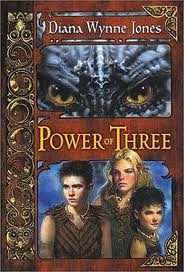
One thing all Jones admirers wonder is: why her relative obscurity? I think Reflections provides part of the answer. Jones was never prepared to repeat herself, and states here she wanted each book to be different. She achieved this to an amazing extent, as Charlie Butler points out. But, I’d argue, if you enjoyed the domestic comedy of The Ogre Downstairs you are likely to be a bit befuddled by the tribes of Power of Three. Or if, like me, you could not wait to read more about Cat and Chrestomanci Castle, you are not happy to find the next in the series set in a boarding school (Witch Week), or a version of Renaissance Florence (Magicians of Caprona). Maybe this is where Harry Potter, which sticks firmly to Hogwarts, had the popular edge.

There are so few books like this that go into a children’s writer’s head, and really get to grips with their life and craft, in an accessible way. I wish there were more. There’s just one thing. In my favourite Jones novels, no matter how often I have read them, I never want the story to end. I was hoping that this book would tell me exactly how she did this. But that remains Diana Wynne Jones’s mystery.

Publisher: David Fickling Books (Print) and Transworld Digital (Kindle)

www.EmmaBarnes.info

Return to REVIEWS HOMEPAGE

Thursday, 20 October 2011

'Writing for Children' by Linda Strachan: reviewed by Rosalie Warren


First of all, a big thank you to Linda Strachan. Reading her book, Writing for Children, helped me get started with writing for young folk, to persevere with my revisions and submissions and, eventually, to find a publisher for Coping with Chloe, my first children's/YA book.

Actually, to speak of 'reading' Strachan's book is something of an understatement. I tend to treat my how-to-write books rather like Bibles or other religious texts. Perhaps if I squeeze a book hard enough, some of the magic will seep from it into me... inspire my dreams and help me unlock the golden gate to success. I like to think I'm a bit more rational than that, at least some of the time, but to be honest, I'm not sure...

Writing for Children certainly opened a number of gates for me. First and foremost, it helped me believe I could do it. I'd already had two books published for adults, but writing for children was something new, and I had no illusions that it would be easy.

Linda Strachan's book focuses on writing for children up to the age of 12, and she tells you everything a beginning author could possibly need to know, in the straightforward and unassuming manner of one who has been doing it for years and has over 50 books to her name. Unusually, she gives plenty of space to writing non-fiction as well as fiction, and she also discusses at length the practicalities of writing for a fee or writing for companies like Working Partners. All this was new to me and very useful to learn about. Strachan also discusses writing and publishing poetry and plays, and there's a useful section on research. She gives a great deal of helpful advice on the mechanics of writing - how to get ideas, how to tackle plot, structure, characterisation, dialogue, settings, beginnings and endings and point of view... and how to revise your work.

Strachan provides useful writing exercises, too. Normally I skip the exercises in books, but I did try some of hers and I'm very glad I did, as they are unusual and inspiring. She takes you through the process of how to prepare your submissions and send them off to agents and publishers - and what to do when the inevitable rejections come.

There's a useful chapter on what to expect of your publisher or agent - and what they might expect of you. Plus there are many ideas for self-promotion and advice on how to deal with school visits and other author events. Money matters, contracts and royalties are covered, too, and Strachan offers good counsel on how to work - as I do - without an agent. At the end there's an invaluable list of resources of all kinds, including organisations for writers, courses and consultancies, plus magazines, websites and recommended books.

Another great thing about Writing for Children is the way it is scattered throughout with helpful and inspiring remarks by children's authors of all kinds (plus Anton Chekhov, for good measure). You get the feeling that you're in the company of experts and that, with their help, you won't go far wrong. I've started recommending this book to budding authors who come to me for advice about writing and submitting their children's books.

My copy is now severely battered. Like a favourite old teddy bear, I still turn to it from time to time, and the section on handling rejection is well-stained with coffee, chocolate crumbs and tears. It's been scribbled on, too, and a number of the page corners turned down. Can a recommendation come more highly than that?

Writing for Children
Author: Linda Strachan
Publisher: A & C Black
Year of Publication: 2008

On Amazon:

Kindle edition (2009):

Rosalie Warren's website:


Return to REVIEWS HOMEPAGE