Showing posts with label Ellen Renner. Show all posts

Wednesday, 13 August 2014

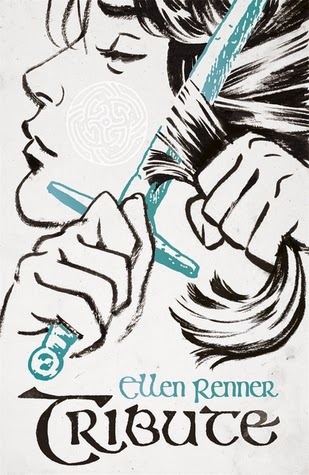
TRIBUTE – by Ellen Renner

Reviewed by Jackie Marchant


This is heart in your mouth, gripping stuff.  From the first page, you know that its herione Zara faces impossible odds and, even worse, her deadly enemy is her own father, Benedict.  But, rather that the ever popular feisty gung-ho heroine,  Zara is a girl beset by fear rather than confidence.  She doesn’t appreciated her own abilities, and is all the more likeable for it.  She is in a terrible situation – her mother died  because she didn’t agree with Benedict, her beloved Tribute child was ruthlessly killed by him and the only thing that stops him from killing her is the fact that he thinks he can mould her into the daughter he’d like. 

But Zara has been spying for the Knowledge Seekers, who oppose her father.  If he finds out, the consequences will be terrible, yet she has no choice, if she is to free the world from his tyranny.  At the same time, she is his daughter, a mage like him and therefore hated by those she wants to help. 
And then along comes one of her father’s enemies, a Maker from beyond the Wall – a young lad who holds an immediate attraction for her.

This is set in a complex world, beautifully drawn.  The characters are real, their situation desperate.  it is a world where mages give themselves a godlike superiority, where everyone else is considered ‘Kine’ and treated like cattle.  The firstborn of all kine are snatched away to become slaves, or Tributes.  It’s in this harsh world that  Zara battles her own self-doubts, plus the doubts of those who despise her because she’s a mage.  She also has to keep one step ahead of her forbidding father, because he absolutely must not find out that she is spying on him.  He’s one of the nastiest villains I’ve come across.


All this leads to a great page-turner, beautifully written.  And the good news is that there will be a sequel – Outcaste.  


Return to REVIEWS HOMEPAGE

Thursday, 10 January 2013

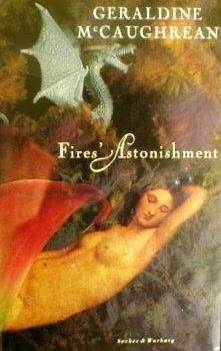
FIRE'S ASTONISHMENT by Geraldine McCaughrean reviewed by Ellen Renner


The Laily Worm

‘I was but seven year auld
When my mither she did dee;
My father married the ae warst woman
The warld did ever see.

‘For she has made me the laily worm,
That lies at the fit o’ the tree,
An, my sister Masery she’s made
The machrel of the sea.’


From the snake in the garden of Eden, via St. George, Theseus and Grendel to Carroll’s Jabberwock, C. S. Lewis’s comical Eustace and Ursula LeGuin’s Earthsea, dragons have been one of storytelling’s favourite devices with which to explore preoccupations about evil, power, the nature of knowledge and the various forms of beastliness lurking beneath our humanity.

There may be some writers who have never wanted to write about a dragon; I am not one of them. I have my own dragon egg incubating, although its hatching date is some years hence. To keep my imagination warm, I like to fuel it with interesting dragon stories. When a friend told me that Geraldine McCaughrean had written a novel for adults about a dragon, and then kindly lent me his copy, it went to the top of my reading pile.

McCaughrean is a writer’s writer. Her prose is elegant, powerful, witty; and this book must surely be amongst her most accomplished. Fire’s Astonishment, published in 1990 by Seeker & Warburg,  was McCaughrean’s second adult novel. It’s a fable, a fairytale – in the best sense of that word – set in a feudal, monk-riddled England. It draws on history, mythology, religion, but most of all, upon McCaughrean’s own gently acid and surgically precise observations about human nature and relationships.

Leo, lord of a small manor near the sea, returns home after a visit to court to find his two adolescent children have disappeared. Their stepmother, the triumphantly pregnant Gywne, recounts the spiritual visitation that led Leo’s son, Elshender, to renounce the world for a monkish life. His daughter, Frideswide, is also missing, reportedly shipped to France as bride to a nobleman.

Now, Leo is a fool – a man more good than bad, but weak and easily led. The reader knows at once that the Welsh-sounding Gywne is to blame; and when rumours arise of a dragon at nearby Worm’s Head, we rightly suspect witchery. The son has been transformed by his stepmother into a beast; and his bethrothed, the dark-haired Elfleda, is shamed and abandoned.

But Gywne’s plan to supplant her husband with her lover and ensure that his bastard child will inherit the manor runs afoul of another simple man – a slightly clever and much better man: Anselm, Leo’s younger brother. Anselm, nearly as large and fleshy as the dragon that was once his nephew, has loved the much younger Elfleda as long as he can remember. If this book has a hero, it is Anselm; if a heroine, Elfleda.

Anselm proposes, and Elfleda accepts with the desperation of the virgin eager to rid herself of her maidenhead and the associated risk of becoming a human sacrifice to the monster dining off the local peasants’ cattle. Poor Elshender, trapped in his beastliness, stalks Elfleda and sends her near witless into his uncle’s arms.

Largely, this is a book about sex. About the beast in all of us; about the human desire to be something more than the sum of our bodily functions. It examines the gross temporalness of our bodies; looks with wit and compassion at the poignancy of our frailty and ugliness – and contrasts the two paths sought as remedy for this earthly, and earthy, state: good and evil.

His man’s rational passion had hankered after Elfleda. Now his unmaterable, mountainous animal heat shackled him to her territory. He marked it, he patrolled it, he held it, and it held him, for a day and a half. When it snowed, the silent cold wiped out all smells and froze the sweat under his scales. The desire in his loins shrank. he thought to set himself on a path away from any place he knew: somewhere empty and open, where hunger would be the only instinct. He rolled wistfully in the snow, his body dissolving into a comfortable numbness and his mind made free to think again. To be a dragon was merely to be seen by human eyes and called a dragon. Away from eyes and away from impulses, Elshender could patrol some empty hinterland, no more loathsome to the things he killed than he had been when he hunted on horseback.

Elshender is a victim, but he is no elegant, heroic youth. Before his transformation, he was a gangling adolescent given to whoring with the local servant girls. His desire for Elfleda is wholly selfish: it is about lust, ownership and status.

One of McCaughrean’s touches of genius in this book is that her dragon presents us with a portrait – in wide screen, high-resolution – of our own human unloveliness and the claustrophobic torment we sometimes feel trapped within our own ungainly flesh:

…Elshender woke up, dreaming of his father, and turned over. The great weight of his body almost crushed the air out of his lungs. He flung his hips back into their first position, and waited for the feeling of panic to subside.

…Elshender the boy had been thin and over-long in the back, his thighs hardly thicker than his calves, his eyes astigmatic and pale, his arms no stronger than he needed to throw dice or whirl the occasional jessy. He loved that inadequate body now: like Narcissus by his pool, he doted on its remembered image. He saw all its virtues, as if through the eyes of an enamoured woman.

Here, Elfleda tries to convince her new husband, Anselm, of the dragon’s existence:

‘Its leg touched me! Then it raised itself up – not in a squat but right up on its back feet. Its belly was the colour of tripe. I could see its lights pumping and bulging through its skin . . . It was such a . . . meaty animal, ‘Selm! I mean – what do I mean? – I suppose I thought the dragon of the Last days would be vaster, or standing in the sky with stars for eyes, you know? It was the difference between the Golden Calf of the Israelites and an ordinary cow standing there in the garden.’

Beyond the elegance and power of the McCaughrean’s prose, the thing that remains with me most strongly upon reading Fire’s Astonishment is the largeness of the characterisation. Not one among the cast of characters, even the most evil, is given less than their due. Portraits are drawn with intelligence and humanity. Each of these characters will stay with you long after the book has been returned to the shelf (or, in my case, its rightful owner).

Find a copy of Fire’s Astonishment; read it. And hope that McCaughrean will give us another adult novel before many more years pass.


Return to REVIEWS HOMEPAGE

Tuesday, 26 June 2012

DARK ANGELS by Katherine Langrish. Reviewed by Ellen Renner

One day, some years after Adam and Eve had been cast out of Paradise, the Lord God came to visit them in the cool of the evening.
By now, Adam and Eve had lots of children, too many to look after properly. Some of them hadn't been washed, and Eve was ashamed of them. 'Hide,' she told the dirty ones. 'You aren't fit to be seen by God. Keep out of His sight.'
'Are these all the children you have?' asked God, looking at the scuffling parade of clean children lined up before Him.
'Yes,' said Eve.
'Then what you have hidden from Me shall be hidden from everyone,' said God.
The dirty children became invisible to human eyes, and from then on they were outcasts, forced to hide in hills, caves and rocks.
This was the beginning of the elves.

prologue: Dark Angels


A good prologue hints at delights to come and beguiles the reader to turn the page. I'm a fan of Katherine Langrish's Troll Fell books, so I wasn't surprised to find that Dark Angels is a compelling tale of myth and magic set in a vividly drawn historical period.

It's the story of Nest, a noble-born girl who longs to learn 'About star and planets - about saints and miracles - about beasts and birds and far off lands ...' As she plaintively explains: 'I wanted to do something great ...' But Nest was betrothed at five. Now thirteen years old and of marriageable age, Nest is duty-bound to obey her father - Lord Hugo's - wishes and wed a man she doesn't know. What little freedom she possesses will soon be at an end.

Dark Angels is also the story of Wolf, the youngest son of an impoverished nobleman, given to the local Abbey at the age of six to save his father the expense of rearing him. Now thirteen and yearning for adventure, Wolf runs away from the monks and their claustrophobic, rule-bound lives and tumbles headlong into danger. He rescues a feral child from a lonely hillside and hands her over to a Norman Lord who thinks the girl is an elf. Haunted by dreams and driven near-mad with sorrow, Hugo of the Red Mound cannot accept that his beloved wife died in childbirth. Nest's father believes the elves have stolen his love:

'I've heard that once every seven years, Elfland pays a fee to Hell. They must draw lots for one of themselves to go there - down to the everlasting fires - unless -' He stopped suddenly, shutting his teeth.
'Unless what?' Wolf whispered.
'Unless they can steal a mortal to pay the price instead. Do you understand me?' He shook Wolf's arm. 'It will be seven years at this year's end, seven years since I lost my lady.'

And who - or what - is Elfgift, the tiny wild girl Wolf finds on the high ridge know as the Devil's Edge? Is she human, abandoned as an infant because of the birthmark that covers half her face? Has she managed somehow to survive in the wild, living on frogs and beetles, fallen fledglings and blackberries? Or is she, as Hugo believes, an elf and the key to bringing his wife back from the red and green halls of Elfland? Elfgift cannot tell them: she is without language.

Wolf and Nest undertake the near impossible task of teaching the child to speak. Hugo wants Elfgift to tell him the secret way into the underground land of the Elves, where he believes his long-lost love is imprisoned still. But much stands in their way: not only Elfgift's own reluctance, but the many in Hugo's court who fear the child and the bad luck she will surely bring. Worst of all is Brother Thomas, Wolf's old master at the Abbey; a vicious, puritanical monk who delights in bullying the weak and defenceless.

And then, on All Hallows Eve, a stranger arrives: the trickster, the jester, the travelling jongleur called Halewyn.

Out of the dark and drizzle, a long, swinging head emerged, huge ears twitching. Hooves clattered and squelched. 'A mule!' someone yelled. Sitting sideways on its back was a man with horns ... Then [Wolf] realised the man didn't have horns. He had ears, as huge and pointed as his mule's. And he was flinging gilded balls into the air: they whirled and dropped into his hands and rose again.

Halewyn, with his shock of straw-coloured hair and donkey-eared cap, his odd eyes which seem to sometimes flare red with an internal fire, is welcomed by Lord Hugo. Halewyn sings of lost loves and hopeless separation; fuelling Hugo's obsession. At first Wolf also welcomes the juggler. Halewyn seems friendly and jovial and humour is in short supply at La Motte Rouge.

But Halewyn is far more than he first appears. Dogs growl at him, Elfgift fears him and the visitor pulls roses from the air in the dead of winter. Roses which burn the unwary, as though warmed into growth by the fires of hell.

Is the jongleur the Christian Devil, crawled from the Edge that looms of the land roundabout, where the hounds of hell are said to stream across the midnight sky, '...dashing beside a black wagon drawn by goats with fiery eyes, crammed full of screaming souls bound for the pits of hell'? Do his origins go further back: is he the King of Elfland? Is he the lord of the underworld, the Greek god, Hades? Is he Herne the Hunter, storming across the skies with his pack of ice-white hounds?

Can Wolf and Nest save Elfgift from those who seek to use her and those who wish her dead? Can they stop Hugo from retracing Orpheus' tragic journey to the underworld? Will Halewyn help or hinder? Will Nest be forced to marry the odious Lord Rodney? Will Wolf be returned to a life-long imprisonment as a monk of the Abbey?

Writers have always dipped into the stewpot of myth and folklore and fished out what they needed to feed their tales. But Dark Angels is one of the most ambitious minglings I've come across. It borrows from the Greek (Orpheus/Persephone and Hades), the Norse (a house hob), and most of all from the Celtic myths. Herne the Hunter merges with Tam Lyn. Fairies and demons meld and shape shift and, as a finishing touch, Langrish adds a good old fashioned dollop of Christianity. Dark Angels is partly the story of the battle between the old gods and the new.

Published in the U.S.A. as The Shadow Hunt, where it was been chosen for the United States Board on Books for Young People's Outstanding International Books 2011, and nominated for the American Library Association's Best Fiction for Young Adults 2011. It received a starred review from Kirkus Reviews.

A beautifully written tale of love and hate, Dark Angels explores the good and evil that battle within us all. It's the story of two young people who seek to do what is right both for themselves and those they love - as they grow to love the strange changeling, Elfgift. Highly recommended for readers aged nine to ninety-nine.


Return to REVIEWS HOMEPAGE

Tuesday, 22 May 2012

A Life of One's Own; A Review of Sylvia Townsend Warner's Lolly Willowes. By Ellen Renner


Writers make books but, equally, they are created by the books they read: stories that generate that spark of recognition, a sense of affinity of style, theme or treatment which is the literary equivalent of the beginning of a love affair.

I read Lolly Willowes for the first time while an undergraduate, but the author wasn't on the curriculum. Townsend Warner is too obstinate, too honest, too female and too eclectic – too varied in subject matter and style – to have been chosen by the Critics to slot into any of their canonical pigeon holes. What she was –  and is – is wonderfully, hilariously, humanely subversive. It's for that, as much as the indisputable elegance of her prose, that I love her writing.

Townsend Warner's working life as a writer began in the 1920s and only ended with her death in 1978. She was adept at nearly every literary form from diary and epistle to translation, poetry, short story and novel, having been frighteningly well-educated. (Her father, George Townsend Warner, was a master at Harrow).

Her first novel, the witty and outrageous Lolly Willowes, was published in 1926. It was an unlikely best-seller, being part whimsy, part fable and part feminist tract. Its exploration of the role of women in Edwardian middle-class society is a very English interpretation of themes explored in Kate Chopin's The Awakening; while its fantastical elements could be called an early example of magic realism. And in a feminist reversal of the Faustian contract, Laura sells her soul to the devil not for worldly goods and fame, but for solitude, independence and freedom.

When Laura's father dies, depriving her of both a socially acceptable role (his housekeeper) and home (inherited by her elder brother); she bows to her younger brother and sister-in-law's insistence that she join their London household and repress her personality to fit the role of spinster sister and aunt. All her sensuality, her vivid awareness of nature – all her individuality must be confined within the neat hat-box of a room and life doled out to her by family and society. While her sister-in-law Caroline ruminates on the practical implications, Laura is remembering her former self, the young witch:

The small spare-room would be rather a loss. They could not give up the large spare-room to Lolly, and the small spare-room was the handiest of the two for ordinary visitors. It seemed extravagant to wash a pair of large linen sheets for a single guest who came but for a couple of nights.
 
   While these thoughts passed through Caroline's mind, Laura was not thinking at all. She had picked a red geranium flower, and was staining her left wrist with the juice of its crushed petals. So, when she was younger, she had stained her pale cheeks, and hand bent over the greenhouse tank to see what she looked like. But the greenhouse tank showed only a dark shadowy Laura, very dark and smooth like the lady in the old holy painting that hung in the dining-room and was called the Leonardo.

Even in prospect Laura finds city life antipathetic: ...in London there would be no greenhouse with a glossy tank, and no apple-room, and no potting-shed, earthy and warm, with bunches of poppy heads hanging from the ceiling, and sunflower seeds in a wooden box, and bulbs in thick paper bags, and hanks of tarred string, and lavender drying on a tea-tray.

The reality is numbing. Nineteen years and a war pass as Laura sleep-walks through life to the age of forty-seven, haunted by autumnal longings and repressed by her relations. One autumn, by the agency of chance (a theme underlying much of Townsend Warner's writing), Laura wanders into a florist's shop. The shop is 'half florist and half greengrocer' and filled with flowers, fruit, nuts, preserves: all the bounty of nature. It was as though the remnants of summer had come into the little shop for shelter...
    Laura looked at the bottled fruits ... She thought of the woman who had filled those jars ... A solitary old woman picking fruit in a darkening orchard, rubbing her rough fingertips over the smooth-skinned plums, a lean wiry old woman, standing with upstretched arms among her fruit trees as though she were a tree herself ...
    As Laura stood waiting she felt a great longing. It weighed upon her like the load of ripened fruit upon a tree ... She forgot that she was in London, she forgot the whole of her London life. She seemed to be standing alone in a darkening orchard, her feet in the grass, her arms stretched up to the pattern of leaves and fruit ...


Impulsively, Laura purchases a bunch of chrysanthemums and the flowers are wrapped up with several sprays of beech leaves. The autumnal orange and scent of the leaves transfix Laura: They smelt of woods, of dark rustling woods like the wood to whose edge she came so often in the country of her autumn imagination.

Finding that the branches come from the Chilterns, she buys a map of the district and comes to a life-changing decision. During dinner Laura looked at her relations. She felt as though she had awoken, unchanged, from a twenty-year slumber, to find them almost unrecogniseable. Laura announces her intention to go and live in the Chilterns' village of Great Mop. Most of her relations treat this as a joke, but her brother Henry is outraged by the suggestion.

'...you will do nothing of the kind. I'm sorry to seem harsh, Lolly. But you must put all this out of your mind.'
'Why?'
'It is impracticable.'
'Nothing is impracticable for a single, middle-aged woman with an income of her own.'


The reason for Henry's opposition becomes clear when he is forced to admit that he speculated with Laura's money and lost half of it. If Laura goes to Great Mop she will have half her expected income. Her dream of owning her own house and orchard is lost. But the nearness of freedom is too heady to let this sway her: She had forgotten Henry, and the unpleasant things she meant to say to him. She had come to the edge of the wood, and felt its cool breath in her face. It did not matter about ... the darkening orchard. If she were not to pick fruit from her own trees, there were common herbs and berries in plenty for her, growing wherever she chose to wander.

Laura makes good her escape. The tale of Laura setting up a new life as a witch is entertaining, as are her encounters with Satan as he helps her escape her relations (in the form of her visiting nephew, Titus) forever.

Laura's life as a witch secures her her freedom, although Laura could more accurately be described a 'wise woman', a herbalist, brewer and bottler, a gardener and gleaner of hedgerows. And this particular Satan is more closely aligned to Herne the Hunter than any demonic entity. The book is seeped in a particularly 1920s aesthetic of nature mysticism. In one of my favourite passages, the devil explains: 'Once a wood, always a wood.'

The words rang true, and she sat silent, considering them. Pious Asa might hew down the groves but as far as the Devil was concerned he hewed in vain. Once a wood, always a wood: trees where he sat would crowd into a shade. And people going by in broad sunlight would be aware of  slow voices overhead, and a sudden chill would fall upon their flesh. Then, if like her they had a natural leaning towards the Devil, they would linger, listening about them with half-closed eyes and averted senses; but if they were respectable people like Henry and Caroline they would talk rather louder and hurry on. There remaineth a rest for the people of God ... and for the other people, the people of Satan, there remained a rest also. Held fast in that strong memory no wild thing could be shaken, no secret covert destroyed, no haunt of shadow and silence laid open. The goods yard at Paddington, for instance – a savage place! as holy and enchanted as ever it had been. Not one of the monuments and tinkerings of man could impose on the satanic mind. The Vatican and the Crystal Palace, and all the neat human nest-boxes in rows, Balham and Fulham and the Cromwell Road – he saw through them, they went flop like card-houses, the bricks were earth again, and the steel girders burrowed shrieking into the veins of earth, and the dead timber was restored to the ghostly groves. Wolves howled through the streets of Paris, the foxes played in the throne-room of Schonbrunn, and in the basement at Apsley Terrace, the mammoth slowly revolved, trampling out its lair.


As Laura and Satan sit in companionable conversation on a Chilterns hillside, Laura explains the devil's appeal:

[Women] know they are dynamite, and long for the concussion that may justify them ... Even if other people still find them quite safe and usual, and go on poking with them, they know in their hearts how dangerous, how incalculable, how extraordinary they are. Even if they never do anything with their witchcraft, they know it's there – ready! ....That's why we become witches: to show our scorn of pretending life's a safe business, to satisfy our passion for adventure. One doesn't become a witch to run round being harmful, or to run round being helpful either, a district visitor on a broomstick. It's to escape all that – to have a life of one's own, not an existence doled out to you by others.


Lolly Willowes
is a beautifully written, acutely observed and darkly humourous tale of an upper-middle-class Edwardian female who has the temerity to want a life of her own. There is an emotional truth and wry, melancholic wisdom at the heart of this book which seem exceptional considering the then age of the author.

Townsend Warner – several years before Virginia Woolf wrote about the necessity of a room of one's own – wrote a story about a witch which also happens to be a witty social satire and polemic on the right of women to be the protagonists of their own lives. Eighty-six years on, and the discussion continues: I recently wrote about the importance of female heroes in fiction for children on Katherine Langrish's wonderful Seven Miles of Steel Thistles blog. http://steelthistles.blogspot.co.uk/2011/02/fairytale-reflections-20-ellen-renner.html

Return to REVIEWS HOMEPAGE

Tuesday, 24 April 2012

The Kitty Slade Mysteries by Fiona Dunbar. Reviewed by Ellen Renner


Fiona Dunbar's Kitty Slade Mysteries series is not simply an updated take on Nancy Drew, with mysteries to solve and clever kids turned detectives. In Kitty Slade, sassy modern teen meets history courtesy of spooky ghosts. Kitty Slade herself is a streetwise and well-drawn teen, very much of our world, who turns out to have a special knack for attracting the distinctly unworldly. The series will appeal to girls who like realism as well as fantasy, and to readers who like a touch of horror, but not too much.

Kitty Slade is definitely cool: a London kid with attitude and eyeball rolling to match. But she's a teen with a secret: she has inherited phantorama from her Greek mother. Phantorama is the ability to see ghosts and, as Kitty finds out, eventually communicate with them.

Kitty finds out about her unwished-for talent in the hilarious first chapter of Divine Freaks, the first book in the series. In the middle of biology class, to the bemusement of both her classmates and least favourite teacher, a freaked-out Kitty is confronted with 'Rat-Man': a gruesomely unappealing ghost who seems intent on communicating with the living.

Once Kitty figures out that she hasn't flipped, she starts to wonder why a ghost should be resident in the school biology lab. When Rat-man starts haunting Kitty, finding out why and when he died becomes top priority. The mystery seems somehow tied to rich Roderick Eaton, owner of Eaton Antiques. Kitty, her gran and younger siblings rent the flat above his shop on the Portobello Road and now Eaton wants to evict them.

Divine Freaks is a great start to the series and with each successive book, Dunbar hones her premise. The second book, Fire and Roses, finds the Slade family travelling round Britain in a caravan, being home-schooled by the delightful Maro – their Greek grandmother. And now Dunbar introduces the element I find most appealing about these books: modern teen meets ghosts with a past. Dunbar is able to pick and choose historical periods and events that will fascinate young readers. She has fun with the Regency period in Fire and Roses, which involves a 18th century feud between members of the Hell Fire club and spooky scenes in the Chilterns cave where the notorious society held meetings. Kitty is clever and determined, and the friendship between Kitty and her younger brother and sister, Sam and Flossie, as they work to solve the mystery, is well drawn and adds real warmth to the books.

Venus Rocks, the third book in the series, boasts a girl pirate, ghost ships, and a fantastic Cornish setting. Lost love, missing treasure and a vicious ghostly villain make for a page-turning book certain to hold the attention of readers, and especially girls, aged nine plus. With each new book in the series, the Kitty Slade Mysteries become even more compulsive reading, and I'll be joining other readers impatiently awaiting the next instalment, Raven Hearts, out in August.

Return to REVIEWS HOMEPAGE

Monday, 19 March 2012

THREE CITIES AND A CASTLE? by Penny Dolan.

The Case of the London Dragonfish and The Case of the Glasgow Ghoul, both by Joan Lennon.
Castle of Shadows  and City of Thieves, both by Ellen Renner.
During the last month I’ve enjoyed two books by two children’s authors and I’m going to be greedy by mentioning all here. Although both authors both give a sense of the past, they offer two very different reading experiences. Books for different moods, in fact, and maybe for different ages and personalities.

The first two books, THE CASE OF THE LONDON DRAGONFISH and THE CASE OF THE GLASGOW GHOUL begin Joan Lennon’s lively “Slightly Jones” series, set in definitely Victorian times.

Slightly – “skinny and freckly and small, with hateful red hair and a pointy face like an inquisitive ferret” – is a girl who longs to be a detective like the great Sherlock Holmes and lives happily with her eccentric Granny Tonic and assorted lodgers at Limpopo House. Slightly’s curiosity sets her off on bold adventures with Granny and, occasionally and reluctantly, a young pickpocket named Matthew Bone.

In the first book, The Case of the London Dragonfish, an important new fossil in the Natural History Museum, disappears shortly before a Royal Private View and nice Mr Thurgood, one of Granny’s lodgers is wrongfully arrested. Slightly is very suspicious of Professor Octavian Snit of the Spirit House, the wonderfully creepy man in charge of the pale specimens preserved and pickled behind glass in a separate building. The entertaining plot twists and turns in a half-scary, half-rollicking way, and is laced with riddles, false clues and night-time adventures and more.

Cleverly, the ending leads directly into the plot of The Case of Glasgow Ghoul.

In this book,Slightly and Granny travel by train from London to Glasgow’s Hunterian Museum to investigate a strange collection of robberies, further complicated by rumours of ghosts among the tombs and mausoleums of the old burial ground. 

Of course, Slightly can’t help investigating just where she shouldn’t . . .
Written in a light, pacey style, these books are enjoyable, escapist adventures but each plot introduces aspects of Victorian history to the young reader, with relevant Fascinating Facts and links to Slightly Jones own website: http://www.slightlyjones.co.uk/  at the back of the book. I suspect I might be introducing Slightly to a young history-mad relative before too long.  

The next book in this series, THE CASE OF THE CAMBRIDGE MUMMY, is due out now..

My second two books are the powerful CASTLE OF SHADOWS and CITY OF THIEVES by Ellen Renner and these should definitely be read as a pair.


They are set in Quale, an eerie gothic kingdom, in an almost recognisable past. In Castle of Shadows, we meet Charlie, a young, half-starved princess whose runs riot through the dilapidated castle, Her mother, both scientist and Queen of Quale, has mysteriously disappeared. The whole castle is ruled over by the violent Mrs O’Dair, a housekeeper from nightmare. Charlie’s father, the King, has withdrawn from his duties and from Charlie. Instead he spends his hours building tall towers of cards even as, Charlie sooon discovers, the kingdom fills with rebellion. Impatient, prickly and proud, Charlie is determined to find out where her mother disappeared to and why, even though this means she has to ask for help from the gardener’s boy and one-time thief and lock-picker Tobias and brave the very rebels out to destroy the kingdom as she knows it. 


Once you have read Castle of Shadows, it is essential to read City of Thieves which is as much a strong companion piece as a sequel. Tobias Petch, the gardener’s boy, becomes the central character. He becomes, to his horror, implicated in the escape of the ex-Prime Minister Alistair Windlass – who Tobias has recently discovered to be his true father-  just before his hanging. To make things worse, when Tobias tries to hide in the crowded city, he is caught and reclaimed by his brutish Uncle Zebediah Petch and gang and forced to become an apprentice lock-picker. There seems to be no way out of this new life. Meanwhile, back at the castle, Charlie is more and more puzzled by what exactly the Dowager is planning, until the two young heroes meet again in spectacular fashion.


Wonderfully written and full of many interestingly dangerous and mysteriously kindly characters, shades of Aiken, Peake and even Lewis Carroll haunt Castle and City.

So, to conclude: three cities and a castle for you to enjoy.

Penny Dolan
A BOY CALLED M.O.U.S.E (Bloomsbury)
www.pennydolan.com

The Case of the London Dragonfish ISBN 978-1-84647-098-1
The Case of the Glasgow Ghoul ISBN 978-1-84647-114-8
Both by Joan Lennon. Published by Catnip

Castle of Shadows ISBN 978-1-40830-445-7
City of Thieves ISBN 978-1-40830-446-4
Both by Ellen Renner. Published by Orchard Books 2010


Return to REVIEWS HOMEPAGE

Wednesday, 7 March 2012

JUNIPER by Gene Kemp. Reviewed by Ellen Renner


The creepy crawly swung on a spider's single thread outside the grimy bathroom window; round and back again it twirled, parcelled up with spider super glue; an insect deep-freeze, she supposed. She couldn't reach it from anywhere, not that there was much point anyway. It was very dead. Sorry, she thought-waved, and ran downstairs.
The man was there. Mr Beamish.
Standing in the kitchen and straight out of a story by Dickens or Joan Aiken. Juniper had met him before; he knew her and she knew him and they didn't care for each other one little bit. Waiting there for her, the eternal villain, fat, with purple, rubbery jowls and a shiny skin, laughter lines round eyes as small and sharp as pins, full of humour as cruel as the east wind just before the snow falls and greasy as fish and chips, cold fish and chips.
(Juniper, by Gene Kemp. Puffin Books, 1988)


Sometimes a book steals your heart and never lets go. For me, Juniper is one of those books.

Published in 1986 by Gene Kemp, author of the award-winning The Turbulent Term of Tyke Tiler, Juniper seems never to have received the attention it deserves. I had the good fortune to meet Gene a few years ago, when I invited her to speak to a local writers' group - and the temerity to tell her that Juniper was my favourite of her books. At that point her face lit up and she confessed, as few writers are brave enough to do, to a favourite child. She no longer had a copy of Juniper and longed to see mine. Unfortunately, we'd recently moved and it was still in packing crates.

I love the cover Puffin has put on the 1988 edition. (Mine is ex-library, of course: it's sad that they sold off such a brilliant book.) The cover drew me in first; the image of Juniper herself with her one point five arms and determined face, climbing up the hill followed by her friend Ranjit. I bought the book for the cover and because of Gene Kemp's name. I had read Tyke and enjoyed it immensely, especially the clever writing that enables the twist at the end. But like Gene herself, I love Juniper best.

It's inevitable that the writers you love, the ones whose books you read and re-read, will colour your own work in ways you may not realise. Diana Wynne Jones, Margaret Mahey, Joan Aiken: these are my touchstones. But it was revisiting Juniper in order to write this review – in the very month that the American edition of my debut book, Castle of Shadows, is published – that made me realise that the character of Juniper, together with Aiken's Dido Twite, must have influenced the creation of my own heroine, Charlie, although neither was in my conscious mind as I wrote.

Like Charlie, Juniper could be said to have an 'absent' mother. Charlie's has run away; Juniper's mother Ellie is a fey and beautiful woman suffering mental illness whom her daughter must look after. Both heroines have fathers who have let them down and whose failures created the evils facing their daughters; both fathers redeem themselves in the end. Both girls are strong, determined personalities struggling against overwhelming odds in a game played by nasty, adult rules. Both books celebrate the direct, emotional truth of children and contrast a child's desire for what is right with the messiness of the adult world.

Although Juniper was written nearly thirty years ago it hasn't dated. Juniper is disabled: she has lost half of one arm. Her best friend, Ranjit Singh, knows all about racism and feeling an outsider in your home country. The adults are the mixture of goodness, badness, weakness and strength that real adults are. Kemp was a teacher. You feel, reading her books, that she must have been one of those excellent teachers who can change children's lives.

Holding my beloved copy again today, pouring through the pages, I'm newly astonished to see how slender this volume is. Kemp tells her story in 112 pages. And yet, as with all really good books, the story expands beyond the pages. There is so much here: so much poetry of language, of imagery, of emotion, of the thoughts and feelings of a quite extraordinary-ordinary twelve year old girl placed in an impossible situation.

Juniper is a mystery; an adventure about a girl in great danger who believes she no one but a tom cat and a chess-playing school mate to help her; a cracking story that compels you to turn pages full of deft, compact and visual writing. How can anyone not love a girl with one and a half arms who refuses to feel sorry for herself, who laughs and dances, fends off social services and well-meaning teachers, who keeps a tortoise and a hell-fire cat, who embraces hope and life and survives?

Juniper. Find a copy. Read her.

Return to REVIEWS HOMEPAGE

Saturday, 10 December 2011

THE CAT KIN by Nick Green. Reviewed by Ellen Renner


Ben and Tiffany never expected their after-school gym class to be like this. For Mrs Powell teaches pashki, a lost art from an age when cats were worshipped as gods.
But who is their eccentric old teacher? What does she really want with them? And why are they suddenly able to see in the dark?

They are going to need all of their nine lives ...


One of the delights of reviewing purely for pleasure, as we do on ABBA, is being able to return to books that have a special place in your affections. I first read The Cat Kin about two years ago, when a couple of friends recommended it to me. And they were right. The Cat Kin is a cracking read.

Ben Gallagher and Tiffany Maine are young teens living in London. They have loving but far from perfect families. They are ordinary, good kids: nice – but not angelic. Their problems are problems many readers will easily identify with: Tiffany has a young brother with muscular dystrophy and her distracted parents often seem to forget she exists. Ben's mum and dad are separated, but (because Nick Green is too intelligent to fall back on easy clichés) there are no villains here, just two adults trying, with mixed success, to muddle through somehow.

The Cat Kin is an adventure story offering classical ingredients: main characters who find they have special talents, an elderly and wise mentor, spectacularly evil villains. But the familiar outlines are filled in with real originality, such as Green's invention of the lore of Pashki. It's a strong plot handled deftly, with plenty of twists and turns, but it is the author's flare for characterisation that I most admire. Green's ability to get inside his characters' heads, reveal their motivations and emotional journeys, and make the reader care about what happens to these kids is what has pulled me into and and through this book now for the third time.

The pacing is consistently spot on. We're immediately drawn into Ben's world, then Tiffany's. Both these young people are isolated: their parents can't, just now, give them the support they need. And so, while hanging out at the local sports centre, they find themselves drawn into the strange classes given by the mysterious Felicity Powell, who teaches them the secrets of Pashki: a martial art that gives the talented and dedicated extraordinary cat-like powers.

Green gives us just enough of their apprenticeship. He has thoroughly thought out his invented martial art and its history, and offers us a taste of it with wit, intelligence and humour. And because he's got the balance right, it's great fun to join Tiffany, Ben and the other children as they learn how to walk and jump with a cat's skill, to see in the dark, to hear sounds no human could distinguish. The Cat Kin can climb near vertical surface and leap huge distances. If they fall they land on their feet, then turn and strike with invisible but deadly claws. Mrs Powell, their enigmatic and supremely talented teacher, is a charismatic character: like a older version of Catwoman, only fighting on the right side this time.

But Green is careful not to spend too long with the initiation into Pashki, fascinating as it is, before we, Ben and Tiffany are flung headlong into adventure and danger. A sinister businessman, a mad scientist, a brother in danger, a missing teacher. The two teens are faced with moral dilemmas as they face seemingly impossible odds. They make mistakes and bad choices, but keep trying to find the right path and the courage to follow it to the exciting, deadly and satisfying end.

Because I'm familiar with the story, having read it twice before, I thought I'd just glance through the book to prepare for this review. I should have known better. I started reading yesterday afternoon and finished over breakfast this morning. Now I'm looking forward to re-visiting the sequel, Cat's Paw, which I remember as an even more compulsive read. Both published by Strident with fabulous covers. Highly recommended for readers from age nine to adult.

Return to REVIEWS HOMEPAGE

Wednesday, 5 October 2011

Tribe: Monkey Bars and Rubber Ducks


Tribe: Monkey Bars and Rubber Ducks by T. M. Alexander. Review by Ellen Renner


Once upon a time, books about school friendships were a commonplace. But in these days when 'high concept' is a mantra in the publishing industry, books about ordinary children in real-life situations have become something of a rarity. Series fiction, however, can occasionally offer the younger reader a break from a steady diet of protagonists with special powers and/or an affliction of zombies, vampires or fairies.

In addition, T. M. Alexander has succeeded in creating a series for 8-12 year olds which appeals across gender lines. The Tribe is neither blue or pink; it is merely witty, well-written and positive. Here is a writer who enjoys exploring the wonders and disasters real life holds for real children, and who allows her readers to do the same.

My son and I were introduced to The Tribe in 2010 with the publication of the first book in the series: Jonno Joins. My then 13 year old swallowed Jonno in one sitting, and had very positive things to say about the humour and characterisation. We've gone on to enjoy the subsequent titles: Goodbye Copper Pie, Labradoodle on the Loose and now the fourth instalment: Monkey Bars and Rubber Ducks.

The books are episodic in content and narrated in first person by one of the four Tribe members, Keener. Alexander is spot on with the voice, worries and preoccupations of a ten year old boy. She cleverly incorporates lists and diagrams in the books, sprinkling humour or World Record-like information throughout the text. This lightens the whole and breaks the text into easily digestible chunks.

Instead of affliction at the (dead) hands of zombies and vampires, Keener and his friends – Jonno, Copper Pie, Fifty and Bee – suffer lost dogs, school bullies, scary head teachers and tiresome siblings. The adventures are on the mild, rather than the wild side, but they are engrossing nonetheless, and the reader enjoys spending time with the five very different members of the Tribe. The heart of the books is an exploration of the importance of friendship, but also finding individual identity within a friendship group.

Recommended for boys and girls aged 8 to 12.

Return to REVIEWS HOMEPAGE

Sunday, 24 July 2011

Bansi O'Hara and the Bloodline Prophecy by John Dougherty. Reviewed by Ellen Renner.

Classic children's fiction for the 8-12 age group demands adventure, and the first book in John Dougherty's Bansi O'Hara series offers thrills and dangers aplenty.

Bansi lives in modern day London. The only child of an Irish father and British Asian mother, she has no idea that her parents are descended from two different lines of faery royalty, or that their bloodlines, combined in her, offer certain dark powers the long-awaited opportunity to fulfill a dread and fateful prophecy. On a visit to Ireland to stay with Granny O'Hara, Bansi is befriended by a brownie, Pogo, and Tam, a shapeshifter. They are the representatives of a small band of faery folk who are trying to keep the power Bansi represents out of the hands of the Lord of the Dark Sidhe. But the rebels are few and weak, and soon Bansi and her new friends are facing overwhelming odds.

The classic elements are here: a prophecy, a child forced to come to terms with a unique magical inheritance, a dark lord, the battle between good and evil. But bravely, Dougherty chooses a girl to be his hero. Female main characters in adventure stories for this age group are all too rare. Bansi is brave and quick-witted while remaining believably human. She is an ordinary child thrust into an extraordinary situation, and there are times when it seems impossible that she will survive the magical forces ranged against her. Boys as well as girls will be engrossed by the story's twists and turns and geniunely scary moments.

Dougherty plays with British folklore and also borrows from Greek or European myth as the notion takes him. The invitation to the reader to join in the fun is irresistible. Druids rub shoulders with dwarves and selkies, and Doughtery uses the comic potential inherent in certain types of Good People to the full. But the veil of humour regularly lifts to show the darkness behind the myths. Death and destruction lie in wait for the unwary, and the scene where Bansi is chased by a Bruid, the headless man from European myth, is simply terrifying.

Indeed, one of the things I most enjoyed was the way Dougherty weaves humour and terror so effectively into a single compelling story. Scary is hard to write, humour even harder. Dougherty accomplishes both. His comic characters, such as Bansi's grandmother and her best friend, Mrs Mullarkey, squabble hilariously whilst outwitting the faeries ranged against them. His dark characters are suitably chilling and when betrayal enters the picture, we find that the author deals in shades of grey as deftly as he does black and white. The characters in this book will remain with you after you have finished it. I look forward to meeting them again in the sequel, Bansi O'Hara and the Edges of Hallowe'en, out in September.


Format: Paperback
ISBN: 9780440867876
Published: Corgi Yearling, 2008
Price: £5.99
Reviewed by: Ellen Renner

Return to REVIEWS HOMEPAGE